Thursday, July 8, 1993

Hiking the Atlas Mountains

After a three-hour drive from Marrakech, we reached our trail head at Oukaimeden, a popular ski resort in winter but with the look of an abandoned Soviet mental institution in the fall. It's a good spot to begin walking. Needing to spend the night, we made the mistake of staying at Hotel le Courchevel, which brought back memories of the creepy twins scene from "The shining"with its vacant, gloomy and seemingly sinister hallways. Auberge Chez Juju, a small guesthouse, albeit with Spartan accommodations, is the better option. And the restaurant at Chez Juju serves good lasagna.

The plan was to walk six hours a day, our luggage and accouterments accompanying us on three stalwart mules driven by local muleteers.up Jebel Oukaimeden, climbing from 8,600 to 10,800 feet in a matter of hours. The trail, or rather a ribbon of goat tracks, was straight up, switchbacks be damned.  Finally cresting the peak, The sky was brilliant, the air chilled and sparkling. Spread before me were the Atlases, one of the world's great mountain ranges, layers of rock slanted sideways, stacked to the horizon in one direction and thinning into the mighty Sahara in the other. It was a chest-swelling scene.

At the head of the valley leading up from the market town of Asni is the small village of Imlil. Surrounded by the imposing majesty of the High Atlas & Toubkal Massif in particular Imlil is the perfect start point for hiking in the area.


Ouirgane is situated in the dramatic foothills of the High Atlas Mountains, surrounded by almond blossom in early spring and just an hour's drive south of Marrakech; now also the location of Morocco's newest lake.


Immouzer is surrounded by magnificent waterfalls this hillside retreat is recommended for the full relaxation treatment - ideal for walking, bird watching, fossil hunting or merely putting your feet up by the pool.


Ait Ourir is a small settlement just south of Marrakech, and ideal overnight stop if you wish to avoid the hustle and bustle of the city en route to the south or the coast.


Located on the outskirts of Asni, a small Berber village where the road branches off to Imlil and the Toubkal Massif. The kasbah affords stunning views of the mountains and valleys.


Tachedirt, the highest and possibly darkest village in Morocco, was our first night's destination. The educated and progressive king of Morocco, Mohammed VI, promised electricity to all when he took power in 1999, and he was true to his word: Tachedirt has lines strung and waiting. But nobody has figured out how to divvy up payment for the power, so the hamlet remains off the grid, illuminated at night by candles and oil lamps.


Berber women still cook over fire, grind flour on a stone wheel powered by a donkey, use machetes in the fields, do laundry in the river, hand-sew their clothes and use mules for transport. Electricity is not likely to change any of that overnight.  We lighted candles, dressed warmly and retired to our rooms to drink surprisingly decent Moroccan red.

With each day, the scenery became more striking and untouched. Our mules snaked up barren rock faces and along narrow mountain ledges, our bottles of booze clinking shamelessly.
After the severe rock of the peaks, the landscape dropped down and turned suddenly verdant, the path an arbor through fruit and nut trees. Flanks of valleys were terraced with stacked rock walls, some to keep goats in and others to keep them out of the neon green barley. Even the air took on a sylvan light. It was all so bucolic that it had a tranquilizing effect, and I was grateful that the only thought process required of me was to remember to put one foot in front of the other.

At lunchtime, we would round a corner and find that the muleteers had arranged a picnic beside the glinting waters of a mountain stream. There we would lounge; eat tuna salad, dates and khobz bread; drink mint tea; and take a siesta before hitting the trail again. It felt like a scene out of an F. Scott Fitzgerald book.

Occasionally, a Berber farmer would encounter us near a village and enthusiastically shepherd us into his home. This meant the wife had to drop her duties and scramble to make mint tea, remaining in the shadows of the low-ceiling house while the husband entertained us on rugs woven of old pieces of cloth. A large-eyed child would carry in the tea and the patriarch would make a ceremony of adding overpowering amounts of sugar (an expensive commodity) and expertly aiming the amber liquid into tiny tea glasses. He'd then walk us to the edge of town and wave us on our way.


Over five days, we hiked southwest from Oukaimeden to Tachedirt, Tachedirt to Imlil, Imlil to the Azzedine Valley and finally to Ouirgane, driving back to Imlil. Our nights were spent lying about, sipping illicit alcohol (that word, ironically, comes to us from the Arabic alkuhl, representing the essence or the spirit), listening to John's James Bondian tales of global derring-do and feasting on couscous and tagine (slow cooked stews) meals.

Some of the guesthouses were fancier than others. Most had three to eight rooms, and all were comfortable and attractive, with excellent food.  A small settlement just south of Marrakech, and ideal overnight stop if you wish to avoid the hustle and bustle of the city en route to the south or the coast. Ouirgane is situated in the dramatic foothills of the High Atlas Mountains, surrounded by almond blossom in early spring and just an hour's drive south of Marrakech; now also the location of Morocco's newest lake.

Friday, September 11, 1992

Lost in Tangier

Lost in Tangier
The Tangier medina, with its narrow alleyways, interplay of courtyards, arches and domes dotted with cafes and shops. More Photos »
Cafe Centrale, for decades one of the city’s prime people-watching spots, feeling closer to my goal. Maybe it lay up those jagged stairs, or past that unfamiliar mosque or through that arch where the hooded woman was filling a bucket of water from a pump, but it was close. I could tell because I didn’t recognize anything — it was all new.
At last, I reached the top of a final set of stairs, looked around and understood: I’d been here before. There was that same hole-in-the-wall grocery store selling disks of bread, and across from it the old men with wire-frame spectacles sitting on the bench, and beyond them the micro-neighborhood where every child kicking a soccer ball had smilingly mimed the motion of a key in a lock to let me know the area was fermé (closed), every street a dead end. I sighed, starting to sweat. I knew exactly where I was. And I’d failed, for the zillionth time in the last few days, to get lost.
TANGIER seemed a good starting point. Not only does it have a magnificent medina that holds out the promise of geographical bafflement, but it is itself also lost in time and space. Since antiquity, Tangier — at the mouth of the Mediterranean, roughly nine miles from Spain — has been a gray zone between Africa and Europe, never quite belonging fully to one or the other, though controlled, for greater or lesser spells, by Carthaginian, Roman, British, Spanish, Portuguese, French and Arab forces.
Today, Tangier is known in America thanks in no small part to Paul Bowles, the novelist and composer who settled there in 1947, and the Beat Generation who followed him in search of cheap, exotic living (and, as William S. Burroughs said, “for the boys and the hashish”). For a few decades, Tangier was a playground for the wealthy and the literary-minded, but by the 1980s it was crumbling and dismal. When I told a friend who had visited in 1998 that I would be there more than a week, he was appalled.
But what could be more appealing to an aspiring lostie than this messy nowhere, with a fading highbrow aura and no clear future? As Edith Wharton wrote in 1918, when she too came to Morocco without a guidebook (none existed), it was “a sensation to rouse the hunger of the repletest sight-seer.”
Arriving in Tangier, my first afternoon, I saw my friend’s concern was misplaced: This was a city with direction. On its outskirts, huge apartment blocks were going up, financed by Qatari investment firms. “There is no economic crisis here,” my taxi driver said.
Closer in, green parks lined the streets, and men and women (some in Western dress, others in pointy-hooded djellabas) sought shade under palm trees. Then came a modern city center of right angles and perfect sidewalks, with signs pointing to Tanger-Med, a shipping port championed by King Mohammed VI, who took the throne in 1999 and decided to revitalize the region, returning Tangier to its status as an economic and cultural gateway to the West.
But modernity — gridlike and navigable — was not what I needed. Instead, I had the taxi drop me near the old passenger port at the bottom of the medina, that ancient and befuddling labyrinth that offered me the long-denied opportunity to indulge in one of my two favorite travel activities: wandering aimlessly. (We’ll get to the other soon.) Now, aimless wandering is not as easy as it sounds. Subtle desires tend to direct you: Do I really want to climb those crumbly stairs to a likely dead-end? Is that street, with its shawarma stands and vendors of soccer jerseys, too touristy? And so aimlessness often becomes less spontaneous.
The medina had a strange kind of density. The buildings huddled close together, creating a jumble of blind angles and six-dimensional intersections, crowded at times with women shopping for melons, and motorcycles hauling bales of mint. But all of that could evaporate in an instant. Once, I turned a corner and found nothing but a rectangle of concrete where a house formerly stood, as if a giant child had simply plucked it from the urban fabric.
With nothing on my agenda, I took things as they came. If I happened on an orange-juice vendor, I’d order a glass. When I spotted the dingy-but-welcoming Restaurant Victoria, I stopped in for bean stew and deep-fried sardines stuffed with garlic and parsley. When I came across a Moroccan man sitting on a curb with his curly-haired 11-year-old daughter and a pair of fishing poles, I paused to ask his views on fatherhood (“You have to be a professor, a magician, a singer, a dancer,” he said) and see the catch of the day: a writhing octopus. Up in the Casbah, the walled fortress atop the medina, I walked into the Casbah Museum, where I violated one of my rules by studying a wall-size map of ancient Mediterranean trade routes.
The Casbah was also where I began to indulge in my other favorite activity: sitting still. It was there that I found Le Salon Bleu, an open-air rooftop cafe where evening views — from the medina to the beaches on the bay to the hillside houses of the far suburb of Malabata — were unparalleled. Over mint tea or watermelon juice, I’d watch the headlands of Spain grow misty as the sun set and men in robes and kufis gathered on the plaza below to kibitz. One evening, on the patio next door, white-haired Westerners attended a dinner party, catered by waiters in stereotypical Moroccan regalia.
In the early morning, it was the Hotel Continental, a colonial-era hulk, crusty with age but maintained enough (fresh paint, free Wi-Fi, cheerful employees) to be comfortable. I’d wake up to high ceilings and a window that looked out to the old port, and then, lingering over coffee and croissants on the terrace, I’d think of the illustrious names of those who stayed here before me: Degas, Delacroix, Matisse, Kerouac. Before lunch, you could find me at a table outside Les Insolites, a bookstore-gallery-cafe on a quiet pedestrian street; after lunch, sitting at one of the half-dozen cafes outside the French Consulate — Gran Cafe de Paris is the classic, but Semiramis serves a better café noir — I watched everything from a Rolls-Royce with Dubai plates to a red Bugaboo stroller go by.
As much as I enjoyed staying in one place, I felt guilty. The writer in me (or maybe all that caffeine) wanted me out of my seat, in search of places that I could enter into the blog-driven machine of my former life. How could I just, you know, sit there?
But sitting had its uses. One afternoon, in the cafe of the Cinémathèque de Tanger, a restored art house showing Jacques Tati retrospectives.
That evening we set off for Cafe Hafa, a renowned cafe that Michelle said she had visited. She led the way, which involved a 45-minute detour through the Casbah. Finally, we reached Marshan, a genteel neighborhood just west of the medina, where broad avenues ran past grandly decaying mansions and pristine palaces. The sun was heading for the Atlantic, and Michelle took us down one side road after another, none of which seemed to have Cafe Hafa at its end. We did, however, reach a vast Muslim graveyard shimmering in the golden hour, and a derelict house with luxurious gardens. Eventually, we asked for directions from the machine-gun-toting guards outside what we assumed was a royal residence, and they set us straight. Five minutes later, we were seated on one of Hafa’s dozen terraces, sipping mint tea and gazing at the sea.
Once, I found myself part of a group drinking beer and vodka at the Chellah Beach Club, a popular night spot. There was Florian Vetsch, the exuberant Swiss German translator for Paul Bowles, and Mr. Vetsch’s wife, Bouchra, a Moroccan woman with all the heft and bluster of a Munich barmaid.
 One afternoon, I’d returned to Marshan and discovered a plaza, lined with Greek columns, that led to a cliff edge. Below lay a small neighborhood I’d never noticed before, and up from this tiny labyrinth came the frenzied beat of drums. Someone was getting married. I perched on the rocks, expecting the drummers to come into view. But though their beats swirled through the invisible streets, the musicians themselves never emerged, and at last I sank back on my heels and accepted the music for what it was: the rhythms of a place always just beyond my horizon.
It was fitting. Though I’d originally thought of Tangier as a lost city, I’d been wrong. It was where it had always been, on the cusp of two worlds, one known, the other a mystery. My Tangier-phobic friend had been right. This wasn’t a city you went to, it was one you passed through, even if, like Paul Bowles, it took you all your life. I’d thought my goal lay through the gates of its medina, but like Achilles and the tortoise I’d spent more than a week merely marching closer. But it turns out Tangier itself is the gate, the starting point, and now, having wandered in its ageless corridors, I can proceed through to the other side — wherever that may be.
IF YOU GO
Even if you’re trying to get lost, it’s O.K. to have some touchstones. And don’t worry, just because you have these addresses doesn’t mean they’ll be easy to find.
WHERE TO STAY
At Hotel Continental (36 rue Dar el Baroud; 212-5-3993-1024; continental-tanger.com) some rooms are better than others, so look before you leap; 595 to 800 Moroccan dirhams a night, about $70 to $95, at 8.45 dirhams to the dollar.
Riad Tanja (Rue du Portugal, escaliers américains; 212-5-3933-3538; riadtanja.com) is a beautiful traditional house turned into a hotel and restaurant. The rooms start at 800 dirhams per night.
WHERE TO EAT AND DRINK
Le Salon Bleu (place du Casbah, enter at 71 rue Amrah; 212-6-5432-7618) has a few food items, from 25 dirhams.
Les Insolites (28 rue Khalid Ibn Oualid, 212-6-4689-0001; librairielesinsolites.tanger.over-blog.com).
Chellah Beach Club (Avenue Mohammed VI, opposite Avenue Beethoven; 212-5-3932-5068).
Darna (rue Jules Cot, near the Place du 9 Avril; 212-5-3994-7065; darnamaroc.org) is a women’s center that operates a peaceful courtyard restaurant. The two-course lunch menu is 60 dirhams, without drinks.
El Dorado (21 Rue Allal Ben Abdellah; 212-5-3994-3353) is a classic restaurant serving Spanish-Moroccan food. Expect to spend 120 dirhams per person, not including drinks.
WHAT TO DO
Cinémathèque de Tanger (Place du 9 Avril; (212-5-3993-4683; cinemathequedetanger.com).
American Legation Museum (8 Zankat America; 212-5-3993-5317, legation.org) was the United States’ first overseas consulate and is now a free museum.

Saturday, June 30, 1990

Amman, Jordan 1987-90


 Highlights:

  • So many opportunities to travel in country besides going to the South by two different routes to Petra, Wadi Rum and Aqaba.  One by the busy more direct Kings Highway or the slower desert route passed the Dead Sea, Madaba and Kerak.   
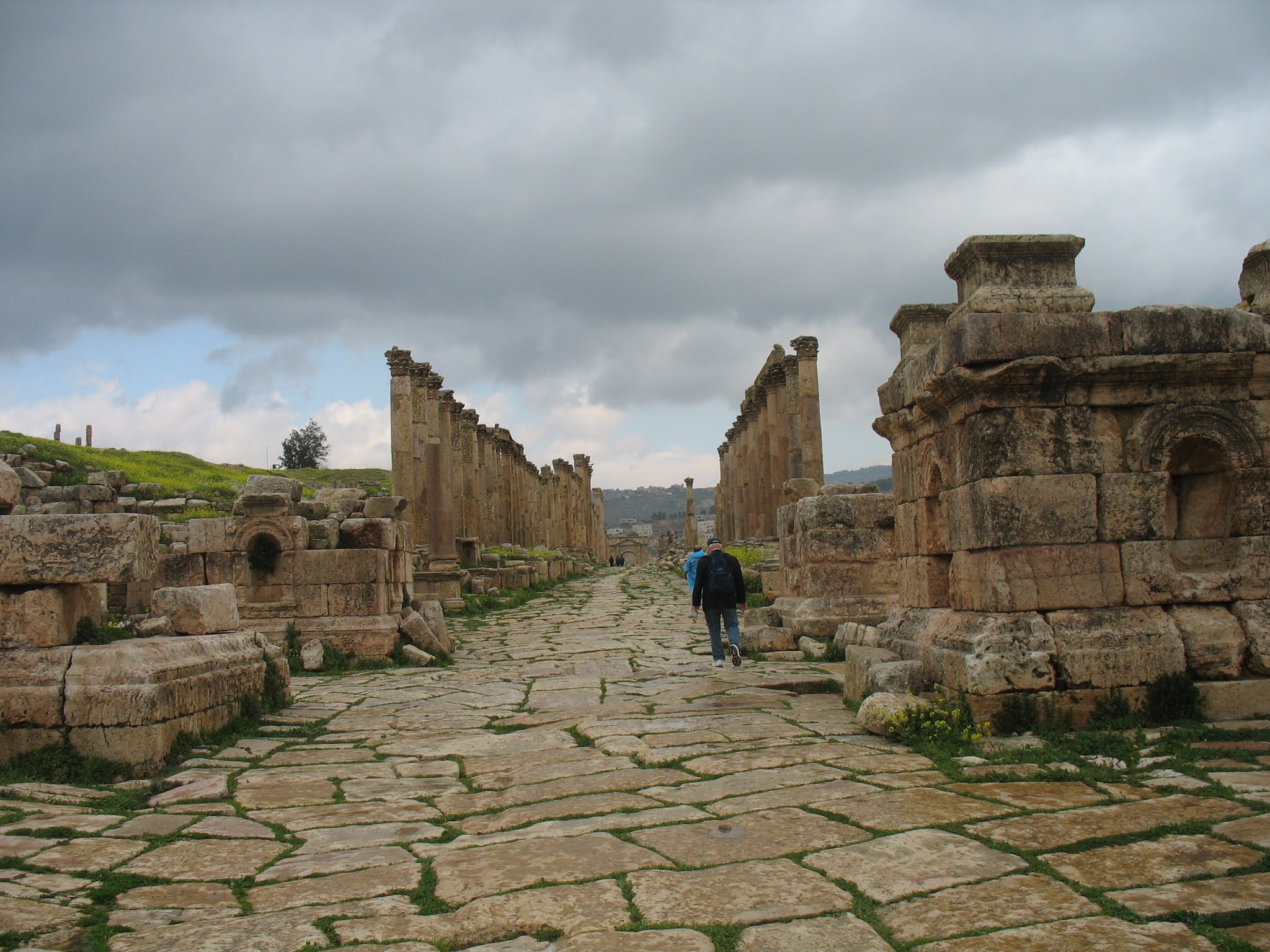
  • Visits to Jerash the 2rd Century Greco-Roman site.  King Hussein's wife Queen Noor would host the annual Jerash Festival in the spring featuring several shows performed by Jordanian, Arab and foreign artists.
  • Queen Noor also hosted many charity events including several benefit walks       
  • Being so close to Israel and Jerusalem I was assigned to make the Diplomatic Pouch run every six months and travel over the Allenby Bridge to Jerusalem and Israel and end up spending a weekend in either Jerusalem or Tel Aviv.     
  • Travelling by rode through the border with Syria to Damascus for shopping at the Grand Bazaar and the Street called Straight. 
  • I was at the Embassy Amman American Club getting ready to watch the 1989 World Series between the Giants and A's when the Earthquake hit the Bay Area.     
Favorite Memories:
  • Among the many trips to Petra the most memorable was as Control Officer for the visit of the DOS Under Secretary for Management and his wife.  Because they didn't want to hike anymore I ended up having to commandeer a Ministry vehicle to exit from Petra.  Then when leaving country his wife had left her medications in her baggage so the airline had to recover her bag in order to get them which caused a delay in departure.  
  • Amman, Jordan was a popular site for soliciting support from King Hussein for peace between Israel and the Palestinians and consequently SECSTATE George Schultz had made several trips to Jordan.  It was always a pleasure to provide support for the visit be it for transportation or manning the control room in the hotel where he and his staff stayed.    

  • Favorite Arabic foods Kebab, Falafel and Shawarma and Mezze including Hummus, Mutabbal, Babaganosh, Tabbaouleh, Foul, Tahini.  Favorite site for Shwarma at 3rd circle near the embassy.  
  • Trip to Palmyra Syria with RSO Tommy Grey.  
  • Trip to Syria before leaving Jordan (See separate Blog Site)
  • Playing tennis with POL Officer Naim Ahmed at the Ambassador's tennis court.  


Ambassador Rocky Suddarth with my staff Jubran, Leila, Afaf, Ronnie, Roula, Nizar 


FMO of the Year in 1990


Cash Award


Royal Jordanian Softball Team sponsored our team to travel to Dubai, UAE for annual spring softball tournaments for teams throughout the Middle East and Gulf.


1987 FMO Conference In Paris 

The Siq Entrance to Petra

The Treasury

Path leading up to another temple

Wadi Rum


Jerash Corinthian Columns of the Temple of Artemis

Amphitheater

Ruins of the ancient Greco-Roman City


Dead Sea

                                                                            
Stone Monument on Mt. Nebo

Plaque showing the distance to various cities in Jordan and the West Bank


From Mt. Nebo Moses viewed: The Dead Sea, the Jordan River Valley, Jericho, Bethlehem and the distant hills of Jerusalem.

Mosaic from Mt. Nebo Church

Kerak Castle

Remains of the Crusader Castle build in 1142


Monday, June 11, 1990

Tour of Syria before leaving Jordan

Merchant selling carpets
 The Bazaar was a centre of Syrian metropolis, it is rather   younger that the town itself. In fact, there were at least   thirty bazaars (markets) there, divided according to various   sorts of goods. Despite the fact that the buildings of   originally merchant and handicrafts´ quarter are not just   the right constructions of old Damascus, a life and   movement are pulsing inside covered streets now as well as   at any time before in past. A fascinating atmosphere of old   bazaar was preserved till now.  Merchant streets of   Damascus Old Town are magnificent and enchanting side-   scene for well paid tourists, on the other hand, just here,   there is a place of endless interchange of view in oriental   style and create some form of social life, where the people   meet and make acquaintance with novelties. A dominating   atmosphere, which just made famous old Damascus   (known as "Orient Eye“, in verses of Arab poets), revokes   as "Beauty Necklace“ or "Paradise Bird Feathers“. 


 Not far from the main Hamadiyeh Souk lies   the   "The Street Called Straight" the old Via Recta,   a Roman street that runs from east to west   through the old city of Damascus. The name is   famous from the Bible as it was visited by St.   Paul as recorded in the book of Acts and contains   several interesting sights from the Roman,   Christian and Islamic periods.  When the Greeks   ruled the city they followed their usual grid   pattern that dated from Hippodamus’ time, then   under Roman rule the street was widened and   colonnaded; many columns can still be seen.

The streets starts at it’s eastern end with the Bab Sharqi, what was the Roman gate of the Sun and close by is St Ananias’ House: "So the Lord said to him (Ananias), 'Arise and go to the street called Straight, and inquire at the house of Judas for one called Saul of Tarsus, for behold, he is praying" (Acts 9:11).

Also close by is the window from St Paul was lowered: “At once he began to preach in the [Damascus] synagogues that Jesus is the Son of God. All those who heard him were astonished and asked, "Isn't he the man who raised havoc in Jerusalem among those who call on this name? And hasn't he come here to take them as prisoners to the chief priests?" Yet Saul grew more and more powerful and baffled the Jews living in Damascus by proving that Jesus is the Christ.
After many days had gone by, the Jews conspired to kill him, but Saul learned of their plan. Day and night they kept close watch on the city gates in order to kill him. But his followers took him by night and lowered him in a basket through an opening in the wall“. (Acts 9:20-25).
So, old Jewish Quarter (Bazaar al-Arvan) offers a space (in shade of citadel) to merchant (business) stands (kiosks) with donkeys and sellers of dirts serving as a combustible in Ali Pasha Bazaar. Here, there are offered, except other products, excellent peaches from orchards of outskirts of Damascus. You can buy here, for instance, olives, dried fruit, nuts or pistaches. All goods is exhibited in old chipped bowls or linen sacks.

Noisy praising of this goods, since a momemt when some potential client could appear, is mastered by fruit sellers as well as by merchants in An-Nahhasin Quarter, where coppersmith handicraft is concentrated. Immediately, when somebody could be interested in buying of some subject, the sellers do their best, with unusual mastery, and inimitable rush of words, to allure buyers from persons, passing by. Haggling regarding price of goods, this is natural matter.

Greatest danger in this respect is menacing, first of all, in Al-Hamidia Bazaar. It is true that antiquaries sell everywhere „genuine“ sabres or daggers from Damascus, but there are no valuable weapons, worked with immense skill sometimes in Middle Age time period. Ion this case, the products are manufactured in modern factories, situated in Syrian capital.

So, after Al-Hamidia Bazaar follow small shops and kiosks (stands) of many handicraft branches. Suleiman Pasha Bazaar gives a witness of especially admired Oriental handicraft: In small shops, in front of them, and everywhere, there are hanging or placed rare carpets of Syrian carpets´ binders.


The Krak des Chevaliers (Krak of the Knights), described by T.E. Lawrence as 'the best preserved and most wholly admirable castle in the world,' is the easternmost of a chain of five castles sited so as to secure the Homs Gap...

 The castle stands upon a southern spur of the     Gebel Alawi, on the site of an earlier Islamic   Castle of the Kurds.' In 1142 it was given by   Raymond, Count of Tripoli, into the care of the   Knights Hospitallers, and it was they who, during   the ensuing fifty years, remodelled and developed   it as the most distinguished work of military   architecture of its time.
 The Krak has two concentric lines of defence, the   inner ramparts lying close to the outer and   continuously dominating them. The single ward   of the original eleventh-century castle covered   about the same area as the later inner enclosure,   and some of the remains of the early work on the   crest of the spur are incorporated in the existing   building. ."

 The outer curtain is furnished on the north and   west sides with eight round towers, of which one   is later than the Crusader occupation, and of   which  two form the north barbican, also extended   at a later date


Ras Al Bassit Ancient Bystantine Remains


Latakia is Syria’s main sea-port on the Mediterranean (186 km) southwest of Aleppo). It has retained its importance since ancient times. Latakia was one of the five cities built by Saluqos Nikator in the second century B.C. He named it after his mother, Laudetia.
Not many ancient remains have survived in Latakia, but there are four columns and a Roman arch from the time of Septimus Severus ( circa 200 A.D.), in addition to a beautiful Ottoman construction called “Khan al-Dukhan”, which is now a museum.

Not many ancient remains have survived in Latakia, but there are four columns and a Roman arch from the time of Septimus Severus ( circa 200 A.D.), in addition to a beautiful Ottoman construction called “Khan al-Dukhan”, which is now a museum.

Latakia is the sea-gate to Syria. It is well-provided with accommodation, and is well-placed as a base from which to explore the coastal regions of the country.

There are beaches, mountains, archaeological sites and many relics of the Crusaders, all within a few hours from each other.
 
Museum of Latakia

Meridien Hotel Latakia


Salah El Din Citadel

Al Samra Beach


Jableh is another Syrian seaside town, 28 km to the south of Latakia. has a theatre built to accommodate 7,000 to 8,000 spectators. Close to Jableh is Tel Sokas, where archaeological relics were recently found, now on exhibition at the Damascus and Tartus museums. 


Aleppo, Syria

This is the second capital of Syria 350 km north of Damascus, and one of the oldest continuously inhabited cities in history. Abraham (pbuh) is said to have camped on the acropolis which, long before his time, served as the foundation of a fortress where the Aleppo citadel is standing now. He milked his grey cow there, hence Aleppo's name "Halab Al-Shahba".

Ever since the 3rd millennium BC, Aleppo has been a flourishing city, with a unique strategic position. This position gave the city a distinctive role from the days of the Akkadian and Amorite kingdoms until modern times. It was the meeting point of several important commercial roads in the north. This enabled Aleppo to be the link in trade between Mesopotamia, the Fertile Crescent and Egypt. The Amorites made it their capital in the 18th century BC. This position also made it subject to invasions from various races; from Hittites, Egyptians, Assyrians, Persians, Greeks and Romans.
Aleppo was prominent in the Christian era; it became a Bishopric and a huge cathedral was built in it, which is still standing.


The conflict between Byzantium and Persia, however, resulted in the latter's occupation of Aleppo in 440 AD. The Persians robbed the city, burned considerable parts of it and damaged many of its features. Though expelled by Justinian, the Persians still threatened Aleppo and frightened its inhabitants until the Arab Islamic conquest came in 636 AD.


Allepo Citadel

The city then regained its status, both cultural and commercial. Apart from the Umayyad and Abbasid periods in which Aleppo flourished, the Hamadani state established by Sayf Addawla in 944 AD made Aleppo the northern capital of Syria. Sayf Addawla built Aleppo's famous citadel, and in his days the city enjoyed great prosperity and fame in science, literature and medicine, despite this leader's military ambitions. Mention should be made of the two most prominent poets, Al-Mutanabbi and Abu Al-Firas Al-Hamadani; of the philosopher and scientist, Al-Farabi; and of the linguist, Ibn Kahlaweh, all of whom lived in Sayf Addawla's court and were renowned for great knowledge and scholarship.

Aleppo was famous for its architecture; for its attractive churches, mosques, schools, tombs and baths. As an important center of trade between the eastern Mediterranean kingdoms and the merchants of Venice, Aleppo became prosperous and famous in the centuries preceding the Ottoman era. Many of its khans (caravanserai) are still in use even today; one of them is called Banadiqa Khan, Banadiqa in Arabic being the term for inhabitants of Venice.


The Mosque of Abraham Aleppo

In the Ottoman age, Aleppo remained an important center of trade with Turkey, France, England and Holland. This caused various types of European architecture to be adopted in Aleppo which can be seen in many buildings today.

Nowadays, Aleppo is famous for its ancient citadel with medieval fortress, the great Umayyad mosque, and the extraordinary souqs (bazaars) with every conceivable kind of article for sale. It was and still the far distant trade center when Shakespeare mentioned it in Macbeth and Othello.
The old city was surrounded by a wall incorporating defense towers and fortified gates built during the Islamic period. A large part of the wall still standing.

The Archaeological Museum of Aleppo contains exhibits from the stone age to modern times.
It has particularly interesting collection of antiquities from some of the most ancient sites in Syria including Mari, Ugarit, and Ebla, as well as objects found in the Euphrates Basin, Hama, Tell Halaf and Ayn Dara, in addition to remains from Greek, Roman, Arab and Islamic periods.
                               

Archaeological Museum of Aleppo


Al-Madina Souk