Tuesday, October 24, 2017

Yorktown Volunteer Trip to 8th AF Base, Savanah (Pooler), GA

The National Museum of the Mighty Eighth Air is located in Pooler, Georgia, near Savannah.  It is dedicated to the history of the Eighth Air Force of the United States Army Air Corps that served in the European Theatre from England during World War II.  Among the many World War II exhibits are aircraft including a B-17 Flying Fortress bomber a model of a Messerschmitt Bf 109G fighter, and a 3/4-scale model of a P-51 Mustang fighter. Aircraft on display outside include the B-47 Stratojet, MiG-17, and F-4 Phantom II from the post-WW II Cold War era.The Mighty Eighth Air Force opened their own museum on May 15, 1996. 


Volunteer group photo with our tour guide Paul Grassey, aged 94, who was a B-24 pilot during WW II with the Mighty Eighth Air Force.  Grassey has served as a volunteer for 18 years and is now a board trustee. You Tube of Grassey at the museum can be seen at  https://www.youtube.com/watch?v=v1iYbIS2gmo.  He also published a book "It's Character  That Counts"  about his experiences during WW II.  


General James Harold “Jimmy” Doolittle (1896-1993) was a pioneering pilot, aeronautical engineer, combat leader and military strategist whose career stretched from World War I to the  Cold War. He is most famous for leading a daring bombing raid over Tokyo in 1942, the first American attack on the Japanese mainland. Doolittle’s 16 planes dropped their bombs and then, lacking fuel to return to their carrier, flew on to crash-land in China and the Soviet Union.


Jimmy Stewart (1908-1997).  Having learned to fly in 1935, he was drafted into the United States Army in 1940 as a private (after twice failing the medical for being underweight). During the course of World War II he rose to the rank of colonel, first as an instructor at home in the United States, and later on combat missions in Europe. He remained involved with the United States Air Force Reserve after the war and retired in 1959 as a brigadier general.

The Boeing B-17, nicknamed the “Flying Fortress”, was a long range heavy bomber that was given the task of destroying enemy war facilities through precision strategic bombardment.

Tail Gun on the B-17.  The tail gunner operates a flexible machine gun emplacement in the tail end of the aircraft with an unobstructed view toward the rear of the aircraft.

The "tora" of the title is the two-syllable Japanese codeword used to indicate that complete surprise had been achieved. It is a coincidence that "tora" means "tiger" in Japanese. “Tora! Tora! Tora!” is a 1970 Japanese-American war film that dramatizes the Japanese attack on Pearl Harbor in 1941. The film was directed by Richard Fleischer, Toshio Masuda and Kinji Fukasaku and stars Martin Balsam, Joseph Cotten, Sō Yamamura, E. G. Marshall, James Whitmore, and Jason Robards. 


 The North American Aviation P-51 Mustang is an American long-range, single-seat fighter and fighter-bomber used during World War II and the Korean War. The Mustang was designed in 1940 by North American Aviation (NAA) in response to a requirement of the British Purchasing Commission.  The definitive version, the P-51D, was powered by Rolls-Royce Merlin 66 two-stage two-speed supercharged engine and was armed with six .50 caliber Browning machine guns.  From late 1943 Mustangs were used by the USAAF's Eighth Air Force to escort bombers in raids over Germany, while the RAF's Second Tactical Air Force and the USAAF's Ninth Air Force used the Mustangs as fighter-bombers, which helped ensure Allied air superiority in 1944.  The P-51 was also used by Allied air forces in the North African, Mediterranean, Italian and Pacific theaters. During World War II, Mustang pilots claimed to have destroyed 4,950 enemy aircraft. At the start of the Korean War, the Mustang was the main fighter-bomber. 


The Boeing Stearman designated by the Army as the PT-17, was used as the primary trainer for  60,000 pilots in all branches of the U.S. military services during the war.  
The Douglas SBD Dauntless was a World War II American naval scout plane and dive bomber that was manufactured by Douglas Aircraft from 1940 through 1944. The SBD ("Scout Bomber Douglas") was the United States Navy's main carrier-borne scout plane and dive bomber from mid-1940 through mid-1944. The SBD was also flown by the United States Marine Corps, both from land air bases and aircraft carriers. The SBD is best remembered as the bomber that delivered the fatal blows to the Japanese carriers at the Battle of Midway in June 1942. The type earned its nickname "Slow But Deadly" (with the SBD initials) during this period.

Lockheed C-141 Starlifter was a military strategic airlifter in service with the United States Air Force Military Airlift Command.  The strategic role demanded that the aircraft be capable of missions with a radius of at least 3,500 nautical miles (4,000 miles) with a 60,000 pound load. The tactical role required it to be able to perform low-altitude air drops of supplies, and carry and drop paratroops in combat.  The aircraft remained in service for almost 40 years until the USAF withdrew the C-141 from service on May 5, 2006, replacing the aircraft with the C-17. 


The B-25 became the most widely used medium bomber of WWII because of its adaptability and durability.  It flew a great variety of missions in all climates against all enemies and is one of the most widely recognized bombers of that era.  It flew the first high profile mission of the war, Jimmy Doolittle's daring daylight raid on Tokyo on April 18, 1942.    The B-25 was in service for the entire war and served in all theaters of the War.   The movie "Thirty Seconds Over Tokyo" starring Spencer Tracy, Van Johnson, Robert Walker and Robert Mitchum recreates the bombing runs and subsequent forced landings in China  


Airman Down exhibit by walking under an unfurled parachute representing the airmen who bailed out over enemy territory. This exhibit includes a recreated “safe house” and a POW camp which houses artifacts donated by former POWS.


Sunday, May 28, 2017

OIG Inspection of Mission China

Overview:


China is the world's most populous country. It has a continuous culture stretching back nearly 4,000 years and originated many of the foundations of the modern world.  The People's Republic of China was founded in 1949 after the Communist Party defeated the nationalist Kuomintang, who retreated to Taiwan, creating two rival Chinese states - the People's Republic on the mainland and the Republic of China based on Taiwan.  After stagnating for decades under the rigid totalitarian socialism of founder Mao Zedong, China reformed its economy along partly capitalist lines to make it one of the world's fastest-growing, as well its leading exporter. China is now a major overseas investor and is pursuing an increasingly assertive foreign and defense policy.  But economic change has not been matched by political reform, and the Communist Party retains a tight grip on political life and much of wider society.  Xi Jinping came to power in 2012-3 as the hand-picked heir of predecessor Hu Jintao and is expected to lead China for the next decade.  Since taking over, he has concentrated power in his hands, in a move seen as a turning away from the traditional system of collective leadership and has sought to present a modern face to China and the world. His position as the most powerful Chinese leader since Mao Zedong was cemented in 2017 when his name and political philosophy was written into the Communist Party constitution by the National Congress.  In early 2018 the party also moved to allow him to remain in office indefinitely by abolishing the conventional two-term presidential limit.  The main themes of his leadership have been economic reform to boost market forces, as well as an anti-corruption campaign.  Xi rejects Western ideas of constitutional democracy and human rights as models for China, and his government moved to silence voices critical of one-party rule, especially on social media.

Source:  BBC Country Profile

OIG Team:

In addition to inspecting embassy Beijing, the team was also inspecting the U.S. Consulate in Hong Kong.  Douglas A. Hartwick was the Team Leader and Lisa Piascik, Deputy Team Leader following on the the inspection of Islamabad.  Richard Behrend (POL), Paul Cantrell (CONS), Robert David (SY), Martha Fikru (IT), Todd Fontaine (SY), Thomas Furey (CONS), Daniel Gershator (PA), Hanane Grini (MGMT), Sarah Hall (MGMT), Paul Houge (PA), Richard Kaminski (ECON) Tanya Manglona (IT) James Norton (IT) John Philibin (Deputy) Charles Rowcliffe (SY).  I spent the week of March 30 at the OIG office in Rosslyn, Virginia for consultations with Department staff and for team meetings.  Upon return the following week I volunteered at the Volvo Car Open Tennis Tournament , an annual WTA event held on Daniel Island.  Sarah Hall, lead management inspector, was in Athens the same time as me but I never met her.  She was part of a tandem, her husband being a POL or ECON officer, she had taken an extended maternity leave.  Not all team members, including myself, went on to Hong Kong, which was fine with me.  Doris and I ended up spending a week in Bangkok after leaving Beijing in route back to the states.   


We all initially stayed at the Marriott but, after a few weeks. several team members moved over to the Four Seasons while Doris, who arrived May 13, and we moved to the Hilton.  All were within easy walking distance to the embassy.  The Chinese government was holding a Belt and Road conference while we were there so the hotel was crowded with visitors from mostly developing countries.  

During the inspection OIG rolled out the new TeamTec software program to submit our individual Time and Attendance (T&A) which took getting used to since we had to allocate our hours between the inspection/s we were working on and other hours for administration and training.  This was also the time when OIG established its own OIGNet so we were separated from the Department of State network.  We still maintained our Department email address and accessed OpenNet but we had our own OIGNet address and internal network.        

American Embassy Beijing:

The inspection took place in Beijing between April 19 to May 22, 2017.   In the absence of an ambassador, the Chargé d’Affaires was David Rank and the Acting Deputy Chief of Mission was Julie L. Kavanagh.  The acting Management Counselor was James Forbes.  The Regional Security Officer was Gregary Levin who I served with in Amman during his first tour as Site Security Manager for the construction of the new embassy compound back in 1987.   Greg had done quite well rising to Senior Foreign Service.  Greg retired and is now back as a Retired Annuitant (REA) working with DS/International Programs in D.C.  The FMO was Bob Wert, an old-time experienced FMO, who stood about 6'7" and had been around forever.  He ended up in Paris for his last tour.  Bob had a deputy, Mark Turner, who was actually a management generalist who is now S/GSO in Mexico City.  The assistant or number two FMO was Phil Cunliffe who is now FMO in Tbilisi.  The FMO had three LE Staff Certifying Officers given the volume of work.  Steve Carroll, who I had met in 2007 when he was an A/FMO in Beijing, was back as an assistant HRO.  Coincidentally, I had left my packet of DVDs, of mostly WWII videos, in the hotel and thanks to Steve he was able to recover them and forward them on to me via APO.  Steve ended up retiring to Tampa, Florida and is now a Retired Employed Annuitant (REA) and was most recently on a TDY to Bujumbura.  Another former connection with an FMO colleague, Don Simmons, was meeting his daughter-in-law Monica who was an Assistant HRO in Beijing and is now working with Global Talent Management (GTM)/EX.  I never understood why the Department changed HR to GTM.  Jeff Scarce, who I inspected in Islamabad,  is now the FMO in Beijing.  
  
In addition to the embassy there were Consulates in Shanghai, Guangzhou, Chengdu, Shenyang and Wuhan. The inspectors split up into functional specific teams to cover each of the Consulates.  I ended up only going to Shanghai for three days (May 1-3) which was fine with me to at least get a chance to get out of Beijing.        


Findings:

The OIG report cited a challenging work environment for management operations. Upgrades to facilities included a $20 million lease fit-out at Consulate General Shanghai, a $17 million expansion at Consulate General (CG) Shenyang, and a new $29 million office space for Consulate General Wuhan. CG Chengdu was working on an electrical upgrade and CG Guangzhou building faced ongoing structural challenges since 2013.   Embassy Beijing supported an on-compound $17 million renovation project.   The Chinese Government’s limitations on incoming shipments and restrictive policies on taxes and tariffs made these facility-based challenges more complex.  The Facilities Manager did not conduct residential seismic surveys as required in high-seismic areas, such as Beijing, which require seismic assessments using an approved structural engineer.   It was also recommended that all designated post occupational safety and health officers receive required training.  There was also the ocntinual peoblem of air pollution and the need for air quality management.  

In the General Services Office (GSO) there were examples of non-rental costs, some personal, being paid by the wrong appropriation.  These included the cost of condo fees, service charges, maintenance of common spaces, property taxes and even personal services. These costs were referred to Building Operating Expenses (BOE) and should be paid separately from rent.  It was estimated that as much as 50% of the rental cost was BOE.  OIG recommended that the embassy and respective CGs separate the accounting charges between base rent and non-rent costs between OBO, the bureaus, and agencies. Also, any personal services provided to employees like shuttle, maid services, telephone or internet should be paid by the employee.   It was amazing some of the perks received by employees at no cost.  

The embassy had $4.9 million in funds for furnishings and appliances plus another $1.7 million to be collected from agencies in but there was only $880,000 in assets due for replacement.  Regulations required that the GSO conduct an annual assessment of the furniture and appliance pool program, including replacement cycle and spending plan.

In CG Shenyang the contracting officer processed $1.4 Million in contracts from 2015 through April 2017 without a contracting warrant resulting in unauthorized commitments.  This resulted in unauthorized commitments totaling $1.4 million during that period. Although the Bureau of Administration’s Office of the Procurement Executive informed the contracting officer of this issue in June 2015, the officer did not address the deficiency until February 2017.  OIG found that some Contracting Officer’s Representatives failed to adequately perform their duties while others did not receive the required training. We recommended the embassy require all contracting officer representatives and government technical monitors be properly trained and administer their contracts in accordance with Department standards.

There were issues with security and access controls at the embassy offsite warehouse that needed to be addressed.  Lastly, not all of the embassy motor pool drivers were properly trained and medically cleared drivers to operate official vehicles.

The Department’s hiring-freeze caused gaps in staffing at the embassy and especially the Consulates, particularly in management positions typically held by eligible family members (EFM).  Security clearances took for ever as 17 EFMs were pending and seven were pending classification.    OIG found inconsistent Embassy Human Resources (HR) support for Consulates General.  None of the consulates general had U.S. direct hire human resources officers, and instead depended on the embassy’s four human resources officers for support.  I know from my experience in Shanghai that an EFM was sorely needed in the HR office to oversee that operation.  Also, the embassy did not have a documented agreement describing its human resources responsibilities for the consulates general, including support visits. OIG recommended that the embassy implement procedures outlining the human resource support services provided and the frequency of visits at each of the five constituent posts.  CG Wuhan did not base its cost of living allowance on Wuhan but Beijing and also their Post Differential on the rate used by CG Shenyang. Justifications for Consumable Allowances for CG Chengdu and Wuhan had not been submitted every two year as required.  OIG questioned if the consumables allowance was even still justified.

In the area of financial management OIG found that the Embassy and CGs paid Official Residence staff their monthly salaries directly through electronic fund transfer as opposed to the Ambassador, DCM or Principal Officer paying directly as personal staff.

Unliquidated obligations (ULOs) included $497,000 in the FY 2012 International Cooperative Administrative Support Services (ICASS) allotment; $45,093 in FY 2012-13 diplomatic and consular program allotments for secure procurement of computer equipment and accessories; and $39,541 in public diplomacy grant funding. The embassy ended up de-obligating $581,634 so that the funds could be put to better use.

Supervisors of sub cashiers at Consulates in Chengdu and Shenyang failed to conduct required Quarterly Unannounced Cash Verifications as required.  Embassy Beijing issued a management instruction stressing the importance of supervisor cash verifications as an important internal control. 


Highlights:

See our blog of photos from our visit. 
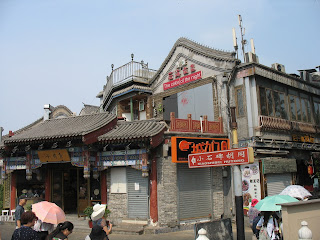

Chaoyang District

Paul and I enjoyed a brew at the Great Leap Brewery
Hiking the Great Wall at Gubeikou


On the train to Xian with John Philibin
 and Tom Furey


Terra Cotta Warriors of Xian

Saturday, December 31, 2016

2016 Year in Review


Highlights:

  • OIG Inspection of Embassy Tegucigalpa, Honduras in February(See Separate Blog)
  • Visits to Valle de Angeles, Santa Lucia and the former capital Comayagua
          
    • OIG Inspection of Embassy Belmopan, Belize in March (See Separate Blog)
    • Road trip to Tikal, Guatemala Ancient Mayan ruins  


             The Great Plaza and North Acropolis


    • Charleston Jazz Orchestra performed the music of Stevie Wonder in March
    • In April I volunteered at the Volvo Car Open Tennis Tournament doing court maintenance.  This was probably the 10th year I had volunteered starting back in 2004 as an usher and in subsequent years as a driver before settling on court maintenance dragging the court or brushing the lines.  Sloan Stephens defeated Elena Vesnina 7-6, 6-2.    

    • OIG Inspection of Embassy Islamabad, and Consulate Karachi, Pakistan in May/June (See separate blog)


                 Embassy                                        My Quarters Containerized
                                                                                 Housing Unit (CHU)
    • May:  Spoleto Music Festival and Chamber Music at the Dock Street Theater with Geoff Nuttall (1965-2022) 
    • Freddie Cole Quartet at the Music Hall in June
    • In August we attended a "Hard Hat" Tuning Concert at the new Gaillard Concert Hall
    • August Summer Soiree at Pierce Pavilion on DI
    • Low Country Jazz Festival in September saw Brian Culbertson
    • Also took a quick trip out to San Francisco in September to attend Chris and Debbie's Bay Area farewell.  Boat ride on the bay and great feast at Scoma's on the wharf.  Mix of cousins, co-workers and friends. 
                           

    • OIG Inspection of Embassy Tel Aviv and ConGen Jerusalem October/November (See separate Blog)
      • Discovering Tel Aviv:  Holocaust Museum, Goocha Restaurant; Biking the Boardwalk, Jaffa 
      • Discovering Jerusalem:  Old City, Tower of David, Ancient Tunnels under Old City, Friends of Zion Museum
      • Weekend trips to Caesarea, Akko, Rosh Hanikra,  Nazareth, Capernaum, See of Galilee, Judea, Ein Gedi nature reserve, Dead Sea, Masada, Herodion and West Bank settlements.  
      • Picking olives on the Mount of Olives.    


    • October 8 Hurricane Matthew hits Charleston.  Although it was just a category 1 hurricane, extensive damage was done due to flodding, landslides and destruction to trees.  Doris didn't evacuate and stayed with neighbors but we lost three Leyland Cypress trees in our backyard.
    • The Annual Turkey Day run in November with David and Bob & GLO.
    • December 1 Charleston Symphony performing Handel's Messiah at the Cathedral
    • December 3 Reindeer Run downtown

    U.S. Events

    ·         Donald Trump is elected as US President;

    ·         Amazon Prime Video launches worldwide;

    ·         Scientists invent the Crispr-Cas9, a unique technology that enables medical researchers to edit   and delete DNA, thereby allowing effective genetic engineering;

    ·         Florida nightclub shooting: Omar Mateen kills 49 people and wounds 53 at a gay nightclub in   Orlando;

    ·         Scien

    • Charleston Jazz Orchestra performed the music of Stevie Wonder in March
    • Volvo Car Open in April won by Sloan Stephens
    • May:  Spoleto Music Festival and Chamber Music at the Dock Street Theater with Geoff Nuttall (1965-2022) 
    • Freddie Cole Quartet at the Music Hall in June
    • In August we attended a "Hard Hat" Tuning Concert at the new Gaillard Concert Hall
    • August Summer Soiree at Pierce Pavilion on DI
    • Low Country Jazz Festival in September saw Brian Culbertson
    • Also took a quick trip out to San Francisco in September to attend Chris and Debbie's Bay Area farewell.  Boat ride on the bay and great feast at Scoma's on the wharf.  Mix of cousins, co-workers and friends. 
    • Annual Turkey Day run in November with David and Bob&GLO
    • December 1 Charleston Symphony performing Handel's Messiah at the Cathedral
    • December 3 Reindeer Run downtown
    • WACC meeting with Ambassador Jerry Lanier speaking on the topic of Challenges for Trump

    U.S. Events

    ·         Donald Trump is elected as US President;

    ·         Amazon Prime Video launches worldwide;

    ·         Scientists invent the Crispr-Cas9, a unique technology that enables medical researchers to edit   and delete DNA, thereby allowing effective genetic engineering;

    ·         Florida nightclub shooting: Omar Mateen kills 49 people and wounds 53 at a gay nightclub in   Orlando;

    ·         Scientists and researchers successfully detect the first direct evidence of gravitational waves, using the Laser Interferometer Gravitational-Wave Observatory or LIGO - The existence of gravitational waves was first predicted by Albert Einstein in 1916;

    ·         Pok tists and researchers successfully detect the first direct evidence of gravitational waves, using the Laser Interferometer Gravitational-Wave Observatory or LIGO - The existence of gravitational waves was first predicted by Albert Einstein in 1916;

    ·         Pokemon Go, an augmented reality mobile game, got millions of people out on the street;

    ·         American singer-songwriter and music icon Bob Dylan wins the Nobel Prize in Literature;

    ·         Swimmer and Olympic champion Michael Phelps, holder of the maximum Olympic medals in   history by an individual (23 Gold, 28 total) and 7 world records, retires.

    World Events:

    ·         Brexit Vote: Britain votes to leave the EU - The British Exit is termed Brexit;

    ·         Demonetisation in India; India carries out surgical strikes on terror launch pads across the Line   of Control in Jammu and Kashmir; Indian national Kulbhushan Jadhav abducted from Iran, held   captive by Pakistan; Mukesh Ambani commercially launches Reliance Jio, makes India the   cheapest market for mobile internet data in the world; Mother

    ·         Teresa canonized posthumously as 'Saint Teresa of Calcutta' by Pope Francis at a ceremony in St   Peter's Square in Vatican City;

    ·         The historic Paris Climate Agreement in signed to take effective measures against Climate   Change;

    ·         Dhaka Cafe Attack: 5 terrorists take dozens hostage at the Holey Artisan cafe in Dhaka, kill 22     civilians, 2 cops;

    ·         The haunting image of 5-year-old Omran Daqneesh sitting shell-shocked in the back of an   ambulance in Aleppo, covered in dust with blood on his face and clothing becomes the face of   the Syrian war;

    Movies:

    Best Picture was "Spotlight".  Best actor went to Leonardo di Caprio in "Revenant".   Best Actress was Brie Larson in "Room".  Best supporting actor was Mark Rylance in "Bridge of Spies".  Best supporting actress went to Alicia Vikander for her role in "The Danish Girl".  Best director was Alejandro G. Inarritu. 

    Super Bowl

    Super Bowl 50 saw the Denver Broncos defeat the Carolina Panthers, 24–10. The game was played on February 7, 2016, at Levi's Stadium in Santa Clara, California.  As this was the 50th Super Bowl game, the league emphasized the "golden anniversary" with various gold-themed initiatives during the 2015 season, as well as suspending the tradition of naming each Super Bowl game with Roman numerals (under which the game would have been known as "Super Bowl L"), so the logo could prominently feature the Arabic numerals 5 and 0.   The Broncos took an early lead in Super Bowl 50 and never trailed.  Denver recorded seven sacks and forced four turnovers.   Carolina likewise kept pace by recording five sacks and forcing two turnovers. Denver linebacker Von Miller was named Super Bowl MVP.  This game was also the final game of Peyton Manning's career; the Broncos quarterback, who also won Super Bowl XLI, announced his retirement in March 2016.

    World Series 

    The Cubs defeated the Indians 4 games to 3 to win their first World Series since 1908. Game 7, an 8–7 victory in 10 innings, marked the fifth time that a Game 7 had gone into extra innings and the first since 1997 (which the Indians also lost). It was also the first Game 7 to have a rain delay, which occurred as the tenth inning was about to start. The Cubs became the sixth team to come back from a 3–1 deficit to win a best-of-seven World Series, following the 1925 Pittsburgh Pirates, the 1958 New York Yankees, the 1968 Detroit Tigers, the 1979 Pittsburgh Pirates, and the 1985 Kansas City Royals.  The Cubs, playing in their 11th World Series and their first since 1945, won their third championship and first since 1908, ending the longest world championship drought in North American professional sports history. It was the Indians' sixth appearance in the World Series and their first since 1997, with their last Series win having come in 1948. Cleveland manager Terry Francona, who had previously won World Series titles with the Boston Red Sox in 2004 and 2007, fell short in his bid to become the third manager to win his first three trips to the Fall Classic, after Casey Stengel and Joe Torre.  The 2016 World Series was highly anticipated due to the historical ramifications; the two teams entered their matchup as the two franchises with the longest World Series title droughts, a combined 176 years without a championship.  At the series' conclusion, numerous outlets listed Game 7 as an instant classic, and the entire series as one of the greatest of all time.  Ben Zobrist named World Series MVP after 10th-inning RBI double in game 7.


    Saturday, October 15, 2016

    Caesarea and Akko Israel


    I traveled throughout Israel and Jerusalem most every weekend during my stay.  The first weekend my colleagues and I visited the north coast of Israel from Tel Aviv to Caesarea, Haifa, Akko and Rosh Hanikra near the border with Lebanon.  The following weekend we went to the Holy Land to visit Nazareth and the sea of Galilee,  Church of the Annunciation, Cana, Capernaum, and the Mount of Beatitudes.  Next we went to Samaria to visit some ancient caves and a winery in the Judean hills.  After moving on to Jerusalem we took a day trip to Masada and also visited the nearby nature reserve at Ein Gadi and the Dead Sea.   The rest of the time was spent visiting Tel Aviv, Jerusalem, Jaffa and the West Bank including the ancient site of Herodium.  I had visited the old city in Jerusalem several times before so I didn't need to visit the holy sites again.  However, I did take the opportunity to visit the Israel Museum, Holocoust Museum, the Friends of Zion museum and the Tower of David.

    Caesarea is a town in north-central Israel. Located midway between Tel Aviv and Haifa on the coastal plain near the city of Hadera.   The town was built by Herod the Great about 25–13 BCE as the port city Caesarea. It served as an administrative center of Judaea Province of the Roman Empire, and later the capital of the Byzantine province during the classic period. Following the Muslim conquest in the 7th century, in which it was the last city to fall to the Arabs, the city had an Arab majority until Crusader conquest. It was abandoned after the Mamluk conquest.  It was re-populated in 1884 by Bosniak immigrants, who settled in a small fishing village.  In 1952, a Jewish town of Caesarea was established near the ruins of the old city, which were made into the national park of Caesarea.

    Caesarea's amphitheater is generally well preserved.  At its fullest capacity, the amphitheater was able to seat 15,000 viewers, making it the biggest performance venue in all of Palestine. The amphitheater is still in use today with performances by Israel's biggest stars held daily during the summer months.


    The city’s aqueduct was built along its sandy beaches and carried water from the feet of Mount Carmel in the north to the city center. A system of pipes and arched walls, which carried the water to the city, is still visible today

    The group standing in front of the old hippodrome.  Caesarea's hippodrome is a circular structure originally built as a racetrack, and is similar in style and function to Rome's grand Circus Maximus. The walls that lined the arena have remained intact. On the left would have been the entrance to the old port on the Mediterranean sea.


    North Coast of Israel near Rosh Hanikra

    Michael Standing at the border between Lebanon and Israel.  Beirut is only 60 miles from the Israeli border. 

    Akko was incorporated into the empire of Alexander the Great after his conquest in 332 B.C.E. The city was subsequently seized by the Egyptians until the Muslim conquest in the 7th century CE, when its ancient name was restored. Confusion over what to call the city was compounded by the Crusaders' conquest in 1104, after which it became known as St. Jean d'Acre, or Acre for short.  In 1291, the Mamluks invaded and destroyed the city, killing every remaining Crusader and putting an end to the Latin Kingdom. Acre ceased to be a major city for almost 500 years. The Ottoman Empire in the mid-18th century named the capital of Akko his capital and built a large fortress. It was subsequently fortified by the Turkish governor (1775-1804), Ahmad Pasha al-Jazzer ("The Butcher"). The mosque al-Jazzer built is one of the most beautiful in Israel and the most distinctive building in the old city.  Napoleon landed in Palestine and assaulted Akko in 1799, but he was unable to take the city. His Middle Eastern campaign subsequently collapsed and he withdrew to France.


    The towering, stone-vaulted Knight's Halls of Akko, built 800 years ago by the Hospitallers (a monastic military order) and the medieval knights called Templars who once lived here. Legend has it that Marco Polo may have dined here on his way to meet Kublai Khan.  Following the conquest of Jerusalem by Salah Al-Din in 1187, the Templars made their home in Akko and began to build a strong fortress with its entrance protected by two powerful towers with 28-foot thick walls.  

    The Templars aided pilgrims and the ailing coming from Europe to visit the holy sites of the Land of Israel. They first settled in Jerusalem, on the Temple Mount, hence their name, "the Templars", the guardians of the Temple.


    The tunnel is 1100 feet long and extends from the Templars fortress in the west to the city's port in the east. The lower part of the tunnel is carved in the natural stone and its upper part is made of hewn stones covered with a semi-barreled dome. The tunnel was discovered in 1994 and in 2007 the entire length of the tunnel was made available to the public. 

    Right outside, a tunnel leads out to the Turkish Bazaar via a souvenir shop that was here long before the tunnel was opened to the public.

    Courtyard of Khan al Omdan