Saturday, November 10, 2001

Tallinn, Estonia

Overview:

Estonia suffered the fate of other Baltic countries, occupied for hundreds of years by stronger neighbors, with Swedes, Russians, and Poles fighting over the region. Russia finally took over from the Swedes in the 18th century. Estonia enjoyed a brief period of independence from 1919-40, then came under Soviet domination as a result of the Molotov-Ribbentrop pact. Only lightly damaged in World War II, Tallinn expanded quickly after the war as Russian industrialization drew ethnic Russian immigrants from other republics. Estonia regained independence with the breakup of the Soviet Union in 1991. Politically, Estonia has gone far in building democratic institutions. But some problems remain, particularly with respect to the Russian-speaking minority, which constitutes about a third of the population, and to government efforts to integrate these minorities into Estonian society. Internationally, Estonia is a member of the World Trade Organization (WTO). Given its strong desire to become part of western security structures, Estonia has a goal of NATO accession in 2002. Estonia is one of the most market-oriented, open economies in the former Soviet Union, and maintains a moderate, sustainable economic growth. By itself a small market, Estonia occupies a strategic geo-economic position between the EU and Russia and encourages investment from firms that plan to expand their operations in the region. Bilaterally, the embassy operates in a friendly environment and is well positioned to support Estonia's desire to integrate into western institutions.

American Embassy Tallinn:

The inspection took place from November 1-15 another ten workdays and two welcome weekends.    The Ambassador had left the country before the inspection and the embassy was in the capable hands of the charge d'affaires, Dolores Brown, who went on to be the Management Counselor in Cairo when I was there TDY in the summer of 2009.    The Management Officer, Mike Tulley, became the Director of HR/OE and I had numerous contacts with during the survey phase of future inspections.  Mike was an avid supporter of Manchester United of the English Premier League whereas I was a fan of Arsenal, which he didn't appreciate.    

Findings:

Some of the formal recommendations involved: 

  • An issue regarding the disposition of value added taxes that did not comply with Department of State instructions for handling and reporting receipts.
  • It was surprising that Tulley was not consistently performing the monthly unannounced verification of the principal cashier's accountability as required.
  • Supervisors of sub cashiers did not perform unannounced cashier verifications as required. 
  • For management to verify the monthly consular receipts with official collections, and the accountable consular officer monthly summary of the daily accounting of consular fee receipts.
  • The need to establish an accounts receivable ledger to track collections for long-distance personal telephone calls, mileage for authorized use of vehicles, outstanding travel advances, and other official bills for collection. 

Highlights:

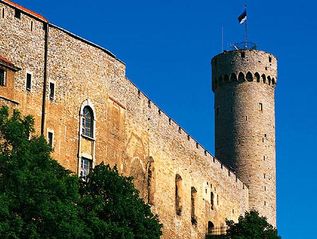
Besides visiting Toompea Castle, the Old Town main square, St. Catherine' s Passage and St. Olaf's Church I enjoyed shopping for local crafts in medieval-style workshops for sweaters, quilts, linens and leather goods. 

We stayed at the Raddison hotel which was a short walk to the embassy.  In terms of food the first course in traditional Estonian cuisine is based on cold dishes—a selection of pickles, meats and sausages served with potato salad.  Estonian signature dish similar to a Swedish dish includes beetroot, potatoes and herring. Small pastries, like the Polish pirozhki, are filled with meat, cabbage, carrots, rice and other fillings often served with bouillon. Herring is common among other fish as a part of the Estonian cold table. Smoked or marinated eel and crayfish dishes are considered delicacies. One of Estonia's national dishes is the Baltic dwarf herring, along with flounder, perch and pike are also popular.                                                 
   
                                                  
                     In Town                                                                 Bob, Joanne, Joe and I having drinks
 
Liquors included Vana Tallinn a rum-based liqueur and different berries like Cloudberry from Lapland that Carl Troy and imbibed on several occasions.    

Our team leader Fred Rondon was an avid bird watcher and would take every opportunity to go birdwatching on a weekend.  Estonia is one of the three top places to go birdwatching because of its location and migration of birds travelling between North America, Europe and Africa.  In fact there are a number of national parks along the western Estonian coast with its large bay to see migratory birds.  I went out with Fred once in while in Tallinn and froze my tail off but he did manage to see a couple of birds that he had never seen before. 


 In old Tallinn one sees medieval walls, buildings, spires, and narrow   cobblestone streets that give the city a distinctive atmosphere of the   14th and 15th centuries. The making of Tallinn goes back to the 13th   century when the Danes built a castle on Toompea hill overlooking   the Gulf of Finland. After the Danes sold northern Estonia to the   German knights, Tallinn became a major center for merchants.   Many of the characteristic German—style buildings were   constructed during this period. With nearly 2km of its original city wall   still standing, Tallinn boasts one of Europe’s best preserved Medieval   fortifications. In fact, a large part of what gives Old Town its fairytale   charm is the system of walls and and towers that surrounds it. Work on the   town's defenses first began in 1265, but the current outline of the wall   dates to the 14th century.


 Picturesque Town Hall Square has been the   undisputed hub of Old Town for the last eight   centuries. Surrounded by elaborate merchant   houses and, in summer, packed with café tables,   it's a natural magnet for tourists. Historically it   served as a market and meeting place,
 Perched on a limestone cliff and towering over the   rest of the city, Toompea Castle has always been   the seat of power in Estonia. Ever since the Danes   and the Knights of the Sword first built a stone   fortress here in 1227-29, every foreign empire that   ruled Estonia used the castle as its base. Today,   appropriately, it's home to Estonia's Parliament. The castle has been revamped countless times.


Street in old town


Thursday, November 8, 2001

Riga, Latvia

Overview:

Situated in north-eastern Europe with a coastline along the Baltic Sea, Latvia has borders with Estonia, Russia, Belarus and Lithuania. It has linguistic links with Lithuania to the south, and historical and religious ties with Estonia to the north.  A Latvian republic emerged following World War I, but it was annexed by the USSR in 1940.  Latvia reestablished its independence in 1991 following the breakup of the Soviet Union. Although the last Russian troops left in 1994, some 26% of the population remains Russian and propaganda efforts are a cause of concern for the Latvian authorities. Latvia acceded to both NATO and the EU in the spring of 2004; it joined the euro zone in 2014 and the OECD in 2016. A dual citizenship law was adopted in 2013, easing naturalization for non-citizen children.  Like its Baltic neighbors, Latvia has made a rapid transition to the free market since the early 1990s.  

American Embassy Riga:


The inspection took place between October 18-31 and we actually had two weekends in Riga.  The Ambassador, who left Latvia before the team arrived summarized our bilateral relations tied to the role the United States can play for the advancement of the Baltic States' security, their integration into European institutions, and cooperative relations with their neighbors, including Russia.  In the absence of the Ambassador, the Charge d’Affaires, was Tracey Jacobson, an impressive young woman, who went on to become the Ambassador to Tajikistan and Kosovo.  The Management Officer was John Lamson, very experienced.  The senior financial specialist, Edmund Glevicks, was very sharp.  He still works at the embassy and used to email me on occasion asking for advice.  During the inspection the newly designated Inspector General (IG), Clark Kent Ervin visited the team to get an overview of an overseas inspection.  Ervin was a Harvard educated lawyer and was the Assistant Secretary of State of Texas.  He lasted two years and was appointed the first IG for the Department of Homeland Security.    

Findings:

  • The physical facilities of the embassy chancery and Ambassador’s residence were unsafe. The OIG raised these issues with the Department in our report citing the risks to the safety of embassy personnel.
  • Lacking a dedicated American Human Resource Officer it was recommended that the Frankfurt Regional Support Center to establish a regular schedule of visits to provide human resources support.  At the time of the inspection, there were 34 past-due performance evaluations from supervisors.  
  • The Department had implemented the automated Travel Manager software program, but the embassy was still doing manual calculation.
  • In terms of funding obligations there needed to be more coordination in monitoring funds for grants between the PAO and financial management.
  • There should also be a publicized administrative policy for personal long-distance calls made from official telephones an accounts receivable ledger to track collections.  

With Joe drafting my section of the Inspection Report
Highlights:
We stayed at the nice Radisson hotel which was a short walk past a nice park to the embassy.  The team did get a chance to get out and visit the sites and partake in eating some Latvian dishes mostly soups with different meat, potatoes and vegetables.  Fish was also plentiful.  Joanne was a Vegan so we had to make sure to check out the menu at restaurants for vegetarian and organic dishes when we went out to dinner.  
  •   Riga Castle
  •   Dome Cathedral
  •   Museum of the Occupation
   
Riga lies on both banks of the river Daugava in the form of a circle and can roughly be divided into two   parts, the right and left side of the river. The right   side of the city is where Old Riga, New Riga and other districts are located. The left part of the city is also called “Pārdaugava”, meaning “Across the Daugava," and suburbs and are located on this side.Āgenskalns & Ķīpsala located on the left bank
  
Old Town Square


Old Town


 In the northwest corner of Old Town is Riga   Castle, a large cream coloured building with four   floors. It dates back to 1330 when it first was   constructed as residence for the grand master of   the Livonian Order. In 1487 the castle was   destroyed, but it was rebuilt again in 1515. Since   then it has been added to and renovated many   times.  Today there are two museums in the castle,   the History Museum of Latvia and Museum of   Foreign Art. 
 Museum of the Occupation:  Housed in a former   Soviet built building, there is a large collection of   artifacts from and descriptions of the 50 years of   occupation by the Soviets, then the Germans, then   the Soviets between 1940 and 1990. Over 15,000   Latvians were rounded up and sent to Siberia   just before the Nazis invaded in   1941.


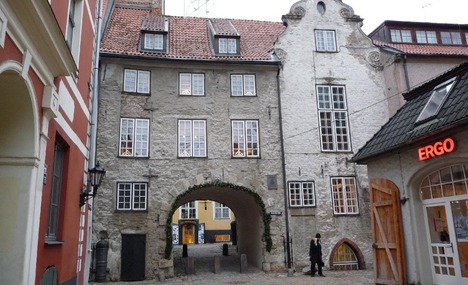
 Sweden ruled over Riga between 1621 – 1710.   During this period the Swedish Gate was built,   more exactly in 1698. The Swedish Gate is the   only remaining of the old city gates. The gate   passes through a house and in the rooms above   the gate lived the city’s executioner. A legend   says a young woman was walled up in the gate.   The young woman had fallen in love with a   Swedish soldier so this was made as a warning to   others.

Saturday, October 20, 2001

Vilnius, Lithuania

Overview:

Lithuania is the largest and most southerly of the three Baltic republics.  The country regained its independence during the collapse of the Soviet Union in 1990. The last Russian troops withdrew in 1993. Lithuania subsequently restructured its economy for integration into Western European institutions; it joined both NATO and the EU in the spring of 2004. In 2015, Lithuania joined the euro zone, and it joined the Organization for Economic Cooperation and Development (OECD) in 2018.

American Embassy Vilnius:

The inspection took place from October 8-17, 2001.  Another quick inspection of essentially seven workdays. For this inspection I focused on management, human resources and financial management. Joanne Thompson joined the team as the second management inspector and covered facilities and general services.  I believe that Joanne did not last long with OIG and this may have been her only overseas inspection.  The embassy was well run but as noted below more agency involvement was required with the International Cooperative Administrative Support Services (ICASS) council.  The Management Officer was John Gieseke, who had served in the Middle East and you could tell by all the carpets he had in his office.  Since there was no American Human Resources Officer there should be a MOU with the Frankfurt Regional Support Center to provide support in this area.  I was impressed with the Foreign Service National (FSN) Senior Financial Management Specialist.  Her name was Ramune Bieksiene and is still working at the embassy to this day as far as I know.  

Findings:

  • Establish an interagency working group within ICASS and complete an annual assessment.
  • Prepare supporting documentation and request funding to meet embassy space requirements.
  • The Regional Support Center in Frankfurt schedule visits to Embassy Vilnius to provide human resources support. 
  • The embassy should inventory all nonexpendable property in selected residence, assign nonexpendable property application information, and place an entry log at the alarm site to record access, deactivation, and reactivation of the alarm system.  Also, respond to open recommendations in the Office of Safety/Health and Environmental Management's April 2000 report to ensure the safety of embassy employees.
  • With the the passing of the Government Performance and Results Act the Department mandated that payments be made by Electronic Funds Transfer (EFT).  This applied to having Foreign Service National (FSN) salaries deposited to employee bank accounts and in processing payments to local vendors overseas.
  • Install the Electronic Certification System hardware and software and coordinate with the Paris Financial Service Center to provide the necessary training to begin transmitting data for payment transactions electronically. 
  • Ensure that supervisors of sub cashiers perform unannounced cashier verifications on a monthly or quarterly basis as required by regulations. 

Highlights: 
  • Besides visiting the sites below, we attended a concert of classical music in the old hall in the old town.  
  • Lithuanian food was influenced by Baltic, Russian and German cuisine.  Potato dumplings, fried bread, beetroot soup, chilled borscht, mushroom cookies, fried curd cakes and potato pancakes were most traditional dishes.   
The capital of Lithuania, Vilnius is the biggest and most beautiful city in the country. Vilnius was first mentioned in 1323 in the letters of Lithuania’s great ruler Grand Duke Gediminas, who invited craftsmen and merchants from all over Europe to settle here. Today it is a modern city with 542,000 citizens. The city has a stunning array of Baroque and Gothic architecture and one of the largest Old Towns in Central and Eastern Europe, which takes up 360 hectares and is on the UNESCO World Heritage List.


The Gates of Dawn on the edge of the Old Town is one of the most renowned sacred places for Catholics around the world. The focus is the Chapel in the Gates of Dawn and its 17th century icon of the Blessed Virgin Mary. In the 20th century, the image of Mary was named the Mother of Mercy, and inside the Cathedral Basilica of St. Peter and Paul in Rome a chapel was created in her honor.


St. Anne’s Church (16 cent.) is a masterpiece of Gothic architecture famous for its intricate and beautiful facade ornamented with red-brick twists and turns and three graceful towers. Next to St. Anne’s stands the ensemble of St. Francis’ and Bernadine Church, the latest discovery at which are several frescoes hidden from view for several centuries under a layer of plaster. 

Upper Castle on Gediminas Hill, built many
centuries ago,
  
The Church of St. Peter and Paul is a masterpiece of Vilnius Baroque. It was built in the 17th century with its wondrous interior decorations of more than 2,000 sculptures and bas-reliefs


Monday, October 1, 2001

Minsk, Belarus

Overview:

Belarus is a poor, highly repressive former Soviet republic with little to offer in the way of jobs and other opportunities. Aleksandr Lukashenko has steadily consolidated his power through authoritarian means and a centralized economic system. Government restrictions on political and civil freedoms, freedom of speech and the press, peaceful assembly, and religion have remained in place. The current migrant situation has some remaining in place as opposed to returning to their home countries or facing off against Polish soldiers and border guards.  


American Embassy Minsk:

American embassy in Minsk opened in 1992 and was part of the Department’s Special Embassy Program.   The inspection took place from October 1-8, 2001 shortly after the September 11 attacks which made us a little anxious to travel.  This trip was the first of four embassies to be inspected, in the Baltic region with other embassies including Vilnius, Lithuania; Riga, Latvia and Tallinn, Estonia.  

This was a very challenging inspection for me since I was still relatively new to OIG just after 9/11 and we only had a week.   I was essentially the lead Management Inspector responsible making travel arrangements for the team and facilitating communications with embassy Minsk before our arrival.  I also had to train a brand new inspector and I had never inspected facilities or general services.  
Fred was kind enough to take the time to write an excellent appraisal of my performance.  I ran into Fred at a fitness club in downtown Falls Church after his permanent retirement around 2010.  He was living in McLean and doing well.  Thanks to Administrative Officer Tom Burke who arranged for our accommodations, orientation to Minsk and a couple of excursions for us.   Among the findings were:

Findings:

The embassy was alarmingly overcrowded and in need of major renovation. The office of Overseas Buildings Operations (OBO) needed to renovate the facilities as quickly as possible and then to maintain them.  An additional contractor from Pacific Architects and Engineers to assist in the maintenance of the embassy complex and reassess reassess the regional coverage for facilities maintenance.     A motor pool dispatcher should be hired.  Morale among local staff was a problem.  An offshore retirement program for should be established for local employees and the Regional Financial Service Center in Paris should provide Embassy Minsk with an annual summary of the amount of U.S. government contributions made toward retirement for each employee going back to 1992, or as far back as records are available.  Erroneous charges to the embassy Overseas Buildings Operations allotment 2221 for budget fiscal years 1997, 1999, and 2000 should be corrected.  Consular receipts for January through September 2001 should be reported.


Robert Raynor (Management), me, Ambassador Fred Rondon, Team Leader and Joe Lahnstein walking to the Embassy. Fred (Fernando) was the former Ambassador to Ecuador and Madagascar and worked at the NSC.   Other team members not pictured were Don Bramonte (Deputy), Bill Belcher (DS), and Carl Troy (CONS).   It was nice travelling again with Bill and my first time with Carl who was a lot of fun especially when we got together for drinks, after dinner.             


 The 3-star Planeta Hotel is located in the center of Minsk. The Old   Town, Jewish Memorial and Opera and Ballet Theatre are located   nearby. The hotel was reconstructed in 2001 and is convenient to the   embassy.  Rooms quite spartan with slat bed and thin mattress.  Food   was very basic Russian fare and not much better in town, although there was a McDonald's.


Victory Square


Fellow team members and embassy staff and families out on an excursion to Mir Castle, historic 16th century fortified castle.

Mir Castle

Thursday, June 21, 2001

Nassau, Bahamas

Overview:

An archipelago of 700 islands and islets, the Bahamas attracts millions of tourists each year.  The visitors come to enjoy its mild climate, fine beaches and beautiful forests.  A former British colony and now a Commonwealth member, the country is a major center for offshore finance and has one of the world's largest open-registry shipping fleets. The Bahamas enjoys a high per capita income.  The huge growth in the services sector of the economy has prompted people to leave fishing and farming villages for the commercial centers in New Providence Island, Grand Bahama and Great Abaco.  As with other Caribbean countries, The Bahamas faces the challenge of tackling drugs trafficking and illegal immigration.  It has taken steps to clean up its offshore banking system.  Dr Hubert Minnis was elected prime minister on 10 May 2017, when his Free National Movement (FNM) soundly defeated the ruling Progressive Liberal Party (PLP). 

Source:  BBC Country Profile

American Embassy Nassau:


We only had ten days in Nassau from June 19-29 so we were really pressed for time to complete our interviews and draft the report.  The embassy staff included over 150 U.S. direct-hire Americans but half were with DOJ/DEA/INS and Coast Guard given immigration and customs inspections in Nassau and Freeport and drug trafficking.  The Management Officer was Andrew “Drew” Oltyan who is still around working with INL at the Department.   The embassy building was purchased in 1995, had no setback needed serious renovations, fire and security enhancements.  I understand that a new site had been purchased for a new embassy compound and construction started in 2019. 


Findings:


A real property concern was the status of the government-owned vacant Great Inagua Aerostat site, OIG recommended the Office of Overseas Buildings Operations, resolve the disposal.  The post needed to establish a comprehensive maintenance program covering all facilities in accordance with the Office of Overseas Buildings Operations Facilities Maintenance Handbook.


The embassy needed to implement the electronic funds transfer of local employees' net pay to individual bank accounts. There were issues with processing official residence expense vouchers that should be borne by the representational appropriation.  Embassy Nassau had serious issues with the former cashier's account and OIG recommended that the issue be submitted to the committee on fiscal irregularities for a decision on whether to close out the former cashier's accountability.  The embassy also needed to establish a centralized system for maintaining accounts receivable records and institute a procedure for following up on outstanding bills.  The embassy should clear the remaining funds in its suspense deposit abroad account and review prior-year travel advance accounts and proceed with collection action for those advances that are still outstanding. The FMO should establish procedures to review and verify the monthly summary of daily accounting sheets of consular receipts from the accountable consular officer. 


After returning home and reviewing the final drafts of our inspection report I had contact with WHA/EX and a former colleague, Wayne Logsden, who was with me in Kuwait following the gulf war when we reopened the embassy there.  We also sorted out the recommendation regarding a bi-lateral work agreement with the bureau.  


Highlights:

  •   Straw Market
  •   Fish Fry Restaurants
  •   Atlantis on Paradise Island
  •   Cracked Conch, fritters, chowder and salad

Holiday Inn downtown where we stayed 

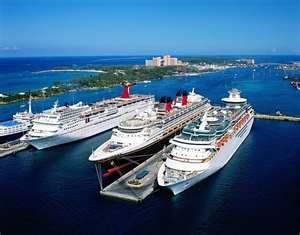
Cruise ships at the port

The Atlantis, Paradise Island

Downtown Nassau

Straw Market


Seafood restaurant famous for Cracked Conch (Fritters) or Conch Salad 

Sunday, June 10, 2001

Barbados


Overview:

Barbados is one of the more populous and prosperous Caribbean islands. Political, economic and social stability have given it a relatively high standard of living.  Known for its beaches and cricket - its national sport - the former British colony has a dual heritage: English - evident in its stone-built Anglican churches and Saturday race meetings - and African, reflected in its music and dance. Barbados was in the past heavily dependent on the export of sugar as its main revenue earner, but in recent decades the economy has diversified into tourism and finance. It also has offshore reserves of oil and natural gas.  Outgoing Governor-General Sandra Mason, the last representative of the British Crown, became the first president of Barbados in November 2021.  She was chosen by parliament the previous month. Despite deciding to become a republic in 2020, Barbados will remain a member of the 
Commonwealth. 
Source: BBC Country Profile

American Embassy Bridgetown:

The inspection took place May 31 – June 18, 2001.   Management Officer, Paul Carpenter, was an experienced FSO.  The FMO was Susan Page, a management generalist, but finance was not her strength.  The GSO was Constance Dierman who became the Consul General at Hamilton, Bermuda and in 2020 ended up being inspected by OIG.  There were 33 formal recommendations made in this inspection.  Like other inspections to date, myself as a management type was saddled with making logistical arrangements for the team.  This meant making sure everybody applied for visas, schedule flights, made hotel reservations and was the main liaison with the embassy for administrative support for the team.  We did stay in a nice hotel the Cassurina Beach.  Well on this inspection my colleagues were not pleased that we had to fly back through Miami to get to our next stop, Nassau instead of flying direct from Bridgetown.  Anyway, the Fly America policy required us to use an American carrier and, if I remember correctly, we were able to connect direst instead of having to overnight in Miami.               

Findings:

The priority for the embassy was to identify a suitable property for a new embassy.  OIG recommended that the Office of Overseas Buildings Operations (OBO) finalize the decision memorandum to continue to start the construction or to look for a new office building site.  The department finally identified a 3.2 acre site, renovated an existing five-story building as well as an addition of similar scale that was completed in 2006. OIG also recommended Office of Office Buildings Operations should assess the regional assignments of facilities maintenance specialist positions in the Caribbean to provide adequate support to Bridgetown.

There were issues with other agencies not using the embassy contracting officer to commit the embassy to the purchase of goods or services.  OIG emphasized that the Department of State will not ratify the unauthorized commitments of other agencies.  The embassy needed to prepare a written comprehensive vehicle usage policy in accordance with Foreign Affairs Manual.

In financial management prior year unliquidated obligations needed to be reviewed to verified and de-obligate funds if obligations are no longer valid. Also, review prior year outstanding travel advance accounts and proceed with collection action for those that are still not cleared. The OIG also cited the Cashier for not reconciling the outstanding deposits from 1998-99 and differences in local currency and U.S. dollars to balance her accountability.  We ended up suggesting that  FSC/Charleston establish a new separate cashier code for Barbados.  OIG also reminded the Cashier to review and verify the daily accounting sheets for Consular collections. 

In terms of Human Resources OIG recommended that the responsibility for paying the employer contributions to the National Insurance Scheme and the American Life Insurance Company should be transferred to the Charleston Financial Service Center.  HR should establish procedures to terminate post differential payments when employees travel to the U.S.  Also, HR should publish and disseminate its policy on hiring American citizens and eligible family members.  In the area of refunds made to employees for sick leave from the government of Barbados National Insurance Scheme procedures were needed to record reimbursements through an automated accounts receivable system.  OIG recommended that a policy be established on overtime and issue an administrative instruction stressing that regulations require all overtime to be approved in advance.

With respect to the other embassies accredited to Barbados (Grenada, Dominica, St. Lucia, Antigua/Barbuda, St. Kitts/Nevis, and St. Vincent/Grenadines) OIG recommended that a mechanism be established to charge the administrative support costs for Embassy Grenada directly through International Cooperative Administrative Support Services. The Bureau of Financial Management and Policy should consider Embassy Bridgetown’s request to change the designation of the sub cashier at Embassy Grenada to principal cashier the accountable consular officer each month.


Highlights:
  •   West coast resorts and beaches
  •   Rugged north coast
  •   East coast excursion overland by 4-wheel
  •   Capital of Bridgetown
  •   Eating Flying Fish    


Our hotel Casuarina Beach Hotel located on beautiful
 Dover Beach and four miles from Bridgetown.


Marina in Bridgetown

St. Michael's Cathedral Bridgetown