Saturday, December 28, 2013

2013 Year in Review

        
Highlights:

OIG Inspections in February-March of Juba, South Sudan and Khartoum, Sudan.

In Juba the only side trips were out to the SABMiller brewery and UN Mission on the White Nile River (earned my nickname "White Bull"; or "El Toro Blanco").   Stayed in pre-fab modular housing on Embassy Compound.   Played tennis with AMB Reno Harnish, Tim Williams and pro at local club.  Watched Super Bowl at 3:00 a.m. on the compound next to pool to see my Niners lose to Baltimore 34-31.   

For more photos and narrative see:  Booth Travels Blog


In Khartoum visited the National Museum, Omdurman market and the confluence of the White and Blue Nile.


For my birthday, March 19th, we went to Beaufort and stayed at our favorite hotel the Rhett House Inn and ate pepper steak at Emily's.  We also went kayaking the ACE Basin with Kim and Dave.


OIG Inspection of Embassy Moscow and CONGEN St. Petersburg 

Before leaving D.C. I had lunch at Pot Belly’s, near the Department and GW campus, with former FMO colleagues (Tom Quinzio, Richard Boohaker and Ismail Asmal), who all served at FSC/Bangkok at one time.  I had worked with Tom at FSI and with Richard and his wife Tacla, at FSC/Paris.  Each of us had retired but came back to work in the Department as Retired Annuitants (REAs) or PSCs (Personal Service Contractors).  In fact Tom just left OBO as an Area Manager and was looking for work.  Richard was working with CGFS and following, Tacla who was in Rome.  Ismail was waiting for his wife to be confirmed as Ambassador to Ghana before they could leave.   

Doris joined me on the OIG Inspection of Embassy Moscow and Consulate in St. Petersburg in the spring and afforded us the opportunity for sightseeing in Moscow to visit the Kremlin, Convent Gardens and the Novodevichy Cemetary.  Most every night we would take walks down Old Arbat street with many shops, restaurants and street performers.  

For more Photos and narrative see:  Doris and Bill Travel Adventures Blog - Moscow; Doris and Bill Travel Adventures Blog - St. Petersburg

OIG Team

Arbat Street


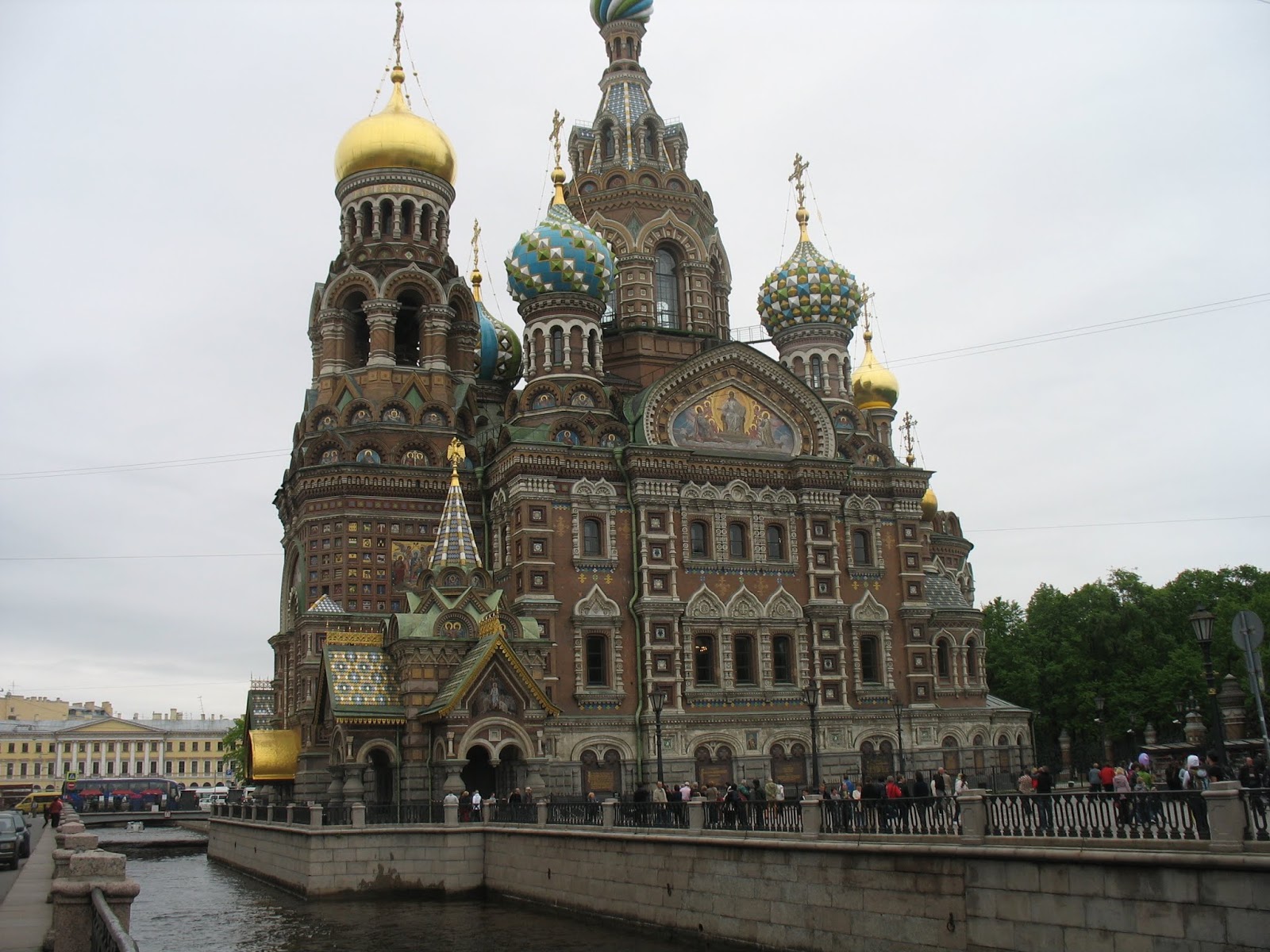
In St. Petersburg visited the Hermitage Museum, Cathedral of St. Peter and Paul, Church on Spilled Blood.  Also visited Catherine Palace in Pushkin and Peterhof Palace. 


In July we spent a couple of weeks in Paris over Bastille Day (Independence Day) and took in the festivities.  Highlights included Eugene Bodin exhibit at Musee Jacqamart Andre, performance of Mozart's Requiem  at the Eglise Madeleine; High Masakela at Parc Floral Jazz Festival and Lee Ritinour and Dave Grusin and New Morning Jazz club.  and, visited Moret-sur-Loing, home of painter Alfred Sisley, 12th Century Notre Dame Church and along the river to St. Mammes.   


For more photos and narrative see: Doris and Bill Travel Adventures Blog Paris 2013 

Participation in a live auction for Special Olympics yielded a one week stay at a cabin in the mountains in Brevard, North Carolina.  We visited Dupont State Forest, Pisgah National Forest, North Carolina Arboretum and kayaked the French Broad River.   


In September Survey work at the Department's Global Financial Services office here for OIG fall inspections of Bridgetown, Havana, Sofia and Budapest.

We also went to Georgetown, SC with the Low Country Explorers and took a tour on Capt. Rod's boat out to a barrier island previously owned by Tom Yawkey, owner of the Boston Red Sox.  The Yawkey family donated 20,000 acres of land and shoreline in Georgetown county to the South Carolina Department of Natural Resources.


Later in September we visited Meehan cousins, John and Liz Froud, in Norwich, U.K. and toured sites in London before embarking on a 12-day Oceania cruise to Barcelona with stops in Bruges, Belgium; Honfleur, Saint-Malo, Concarneau, Pont-Aven, Bordeaux, France; San Sebastian, Bilbao, Coruna, Seville, Spain; Porto and Lisbon, Portugal before arriving in Barcelona.  Highlights in London included Churchill's War Room, Tower of London and Harrods.  On the cruise highlights included Saint-Malo, famous for the location of the book “All the Light You Can Not See”; Vineyards in Bordeaux Guggenheim Museum in Bilbao; excursion to Santiago de Compostela from the port in Coruna; Alcazar of Seville; Port wine in Porto; and, in Barcelona La Sagrada Familia, Antoni Gaudí's renowned unfinished church, started in the 1880s and La Rambla.

For more photos and narrative see:   Doris and Bill Travel Adventures Blog Timeslide, Norwich, London 2013 and London to Barcelona Cruise


  • In October we participated in the annual Susan Komen "Race for the Cure" and in November the annual Turkey Day Run.                                                                                                                                                                     


  • October 26 we attended the "World of BEBOP" Charleston Jazz performance at the CHarleston Music Hall featuring music of Dizzy, Bird, Monk amd more.
  • December 9 we attended the opening of the exclusive Charleston Jazz House for a preview party.  Doris and I have been annual contributors to Charleston Jazz for several years.
  • December 12 we caught the Joe Clark Big Band at the Prohibition to celebrate Frank Sinatra's Birthday.


News of the Nation 

  • Feb. 12: In the first State of the Union Address of his second term, President Obama focuses on the role government should play in growing the economy and stabilizing the middle class. He veers away from any ambitious proposals such as a new stimulus plan in the speech.
  • Jan. 1: The Senate approve a last minute deal to raise tax rates from 35 to 39.9 percent for those earning more than $400,000. The deal also temporarily suspends across-the-board spending cuts. Later that night, the House also passes the legislation. The House vote ends the long dramatic showdown over the fiscal cliff with only a few hours left of the 112th Congress.
  • Jan. 16: In response to recent massacres, including the killing of 20 first graders in Newtown, Conn., and 12 moviegoers in Aurora, Colo., President Barack Obama introduces proposals to tighten gun-control laws. His plan includes universal background checks for gun sales, the reinstatement and strengthening of the assault weapons ban, limiting ammunition magazines to a 10-round capacity, and other measures.
  • Jan. 21: On Martin Luther King Jr. Day, President Obama is sworn in for a second term. He becomes the first president to say the word gay in an Inaugural Address when he compares the battle for same-sex marriage to past battles over gender and racial equality.
  • April 15: Multiple bombs explode near the finish line of the Boston Marathon. At least three people are killed. One is an eight year old boy. More than 170 people are injured. 
  • June 26: The Supreme Court rules that the 1996 Defense of Marriage Act (DOMA) is unconstitutional. In a 5 to 4 vote, the court rules that DOMA violates the rights of gays and lesbians. The court also rules that the law interferes with the rights of each state to define marriage.
  • July 13: A jury in Florida finds George Zimmerman not guilty of murdering Trayvon Martin. The verdict sparks outrage on the internet and protests in cities throughout the U.S., but no riots or extreme violence are reported.
  • Aug. 21: Private Bradley Manning, age 25, is sentenced to 35 years in prison for leaking over 700,000 U.S. government files to WikiLeaks, files that contained classified U.S. military activities.
  • Sept. 16: Former Navy reservist Aaron Alexis, 34, kills 12 people at the Washington Navy Yard, near the U.S. Capitol. Alexis, who had been employed at the base by a military subcontractor, is killed in a shootout with police.
  • Oct. 1: Congress fails to agree on a budget and pass a spending bill, causing the government to shut down.
  • Oct. 16: The night before the debt ceiling deadline, both the House and Senate approve a bill to fund the government until January 15, 2014, and raise the debt limit through February 7, 2014. The bill ends the 16-day government shutdown. It also ends the Republican standoff with President Obama over the Affordable Care Act.
  • Jan. 1: France sends its military forces to Mali to fight against extreme Islamist militants. (Jan. 16): Islamist militants take about 40 foreign hostages at a remote BP site in Algeria. Many fear that the hostage situation is a result of the conflict in Mali.
  • Jan. 22: Israeli prime minister Benjamin Netanyahu is elected to a third term.
  • Feb. 12: North Korea says it has detonated a third nuclear bomb. Earlier nuclear tests were conducted in 2006 and 2009.
  • Jan. 25: Violent protests erupt throughout Egypt on the second anniversary of the revolution. Demonstrators focus their ire on the Muslim Brotherhood and the government of President Mohammed Morsi, frustrated that the country is on an ideologically conservative path and that Morsi has failed to bolster the economy or fulfill promises to introduce broader civil liberties and social justice. Dozens of people are killed in the violence. Morsi declares a state of emergency in three large cities: Suez, Ismailia, and Port Said.
  • Feb. 11: Pope Benedict XVI announces his retirement, becoming the first pope to do so since 1415. He cites advancing age and a growing physical weakness as his reasons for retirement. He steps down on Feb. 28.
  • March 5: Hugo Chavez, the president of Venezuela, dies of cancer at age 58. He had been in office for 14 years.
  • March 13: Cardinal Jorge Mario Bergoglio of Argentina is elected as the new pope, succeeding Benedict XVI. Bergoglio, 76, becomes the Catholic Church's 266th pontiff. He is the first pope from Latin America and the first Jesuit pope. He chooses the name Francis.
  • March 14: Xi Jingping assumes the presidency of China. Of the 2,956 delegates, only one votes against Xi. He had earlier been named chairman of the Central Military Commission and general secretary of the Communist Party.
  • April 14: Nicolas Maduro wins the special presidential election in Venezuela the successor of Hugo Chavez.
  • June 9: Edward Snowden, a former CIA employee, admitted that he was the source of leaks about the top-secret surveillance activities of the National Security Agency. June 21: The U.S. government filed espionage and theft charges against Snowden, who had earlier fled to Hong Kong. The government also requested that Hong Kong extradite Snowden. June 23: Fighting extradition, Snowden traveled from Hong Kong to Moscow.
  • July 4:  The military deposes Egyptian president Mohammed Morsi and suspends the constitution, saying the move is an attempt at "national reconciliation" rather than a coup. Morsi, however, calls it a "complete military coup." He is taken into custody and several members of his inner circle are placed under house arrest. The move sparks massive protests in support of Morsi.
  • Aug. 1: Russia grants Edward Snowden, the American who leaked info about U.S. surveillance, asylum for one year. The temporary asylum allows him to leave the Moscow airport where he has been since June.
  • Aug. 14: Police raid camps in Cairo, Egypt, where protesters have been demonstrating since the July ouster of President Mohammed Morsi. More than 500 people are killed, and the government declares a state of emergency.
  • Aug. 14: Israelis and Palestinians officially begin peace talks in Jerusalem. Expectations are low going into the talks, the third attempt to negotiate since 2000, and nearly five years since the last attempt. The talks begin just hours after Israel releases 26 Palestinian prisoners.
  • Sep. 1: President Barack Obama announces that he will seek Congressional approval for military action against Syria in response to its alleged attack with chemical weapons on civilians. Sep. 4: The U.S. Senate Foreign Relations Committee votes, 10 to 7, to authorize military action in Syria.
  • Sep. 15: A U.S.-led military attack is averted and diplomacy prevails when Russia and the U.S. reach an agreement that Syria must provide an inventory of its chemicals weapons and production facilities within a week and either turn over or destroy all of its chemical weapons by mid-2014. If the government fails to comply, then the UN Security Council will take up the issue.
  • Sep. 21: Shabab militants, based in Somalia, attack an upscale mall in Nairobi, Kenya, killing nearly 70 people and wounding about 175.
  • Oct. 5: U.S. commandos capture Nazih Abdul-Hamed al-Ruqai, a high-ranking al-Qaeda operative who is known as Abu Anas al-Libi, in Tripoli, Lebanon. He was indicted for helping plan the 1998 bombings of the U.S. Embassies in Kenya and Tanzania.
  • Nov. 1: Hakimullah Mehsud, the leader of the Taliban in Pakistan, is killed in a CIA drone strike in Danday Darpa Khel, a militant stronghold in North Waziristan. It is an important victory over the Taliban for the U.S.
  • Dec. 1: Hundreds of thousands of protesters in Kiev, Ukraine, demand that President Viktor Yanukovich resign. The protesters also call for the country to develop stronger ties to Europe and the West and move away from Russia. The protests started earlier after Yanukovich refused to sign political and free trade agreements with the European Union under pressure from Russia.
  • Dec. 5: Nelson Mandela dies at age 95, after a lung infection and several months of ill health.

Movies

"Argo" won the Oscar for best picture at the 86th Academy Awards.

Daniel Day Lewis won the lead actor award for "Lincoln"," and the lead actress Oscar went to Jennifer Lawrence for "Silver Linings Playbook".  Anne Hathaway, "Les Misierables"  and Christoph Waltz, "Django Unchained" won for supporting actress and supporting actor.


Super Bowl    
The Ravens survived the frenzied comeback by the 49ers for a thrilling 34-31 win at the Superdome on Sunday night and their second NFL championship in 11 years.  Leading by 22 points when most of the Superdome lights and the scoreboards went dark early in the third quarter, the Ravens used a last-gasp defensive stand to hold on after the momentum strangely swung to the 49ers. San Francisco receiver Michael Crabtree was bumped in the end zone on the 49ers' final offensive play -- the contact appeared incidental  but coach Jim Harbaugh insisted a penalty should have been called.


World Series
  
The Boston Red Sox defeated the St. Louis Cardinals in six games to win their  third World Series title since 2004.  After a disappointing 2012, the Red Sox tore through the regular season under newly hired manager John Farrell to a first-place finish in the AL East and the best record in the league (97-65). Some fresh faces like Shane Victorino, Mike Napoli and Jonny Gomes were sprinkled in with familiar ones like Jon Lester, Dustin Pedroia and David Ortiz, who went on to be named the World Series MVP. 


Recap of 2013 Grand Slam Tennis Tournament Winners

·         Australian Open Men's Singles. Winner – Novak Djokovic defeated Andy Murray

·         French Open Men's Singles. Winner– Rafael Nadal defeated David Ferrer

·         Wimbledon Men's Singles. Winner – Andy Murray defeated Novak Djokovic

·         US Open Men's Singles. Winner –  Rafael Nadal defeated Novak Djokovic
 

·         Australian Open Ladies Singles. Winner – Victoria Azarenka defeated Li Na

·         French Open Ladies Singles. Winner– Serena Williams defeated Maria Sharapova

·         Wimbledon Ladies Singles. Winner – Marion Bartoli defeated Sabine Lisicki

·         US Open Ladies Singles. Winner – Serena Williams defeated Victoria Azarenka


Friday, April 26, 2013

Moscow and St. Petersburg, Russia

Overview:

Russia - the largest country on earth - emerged from a decade of post-Soviet economic and political turmoil to seek to reassert itself as a world power.  Income from vast natural resources, above all oil and gas, helped Russia overcome the economic collapse of 1998, but the oil price slump of 2014 ended the long run of prosperity. The state-run gas monopoly Gazprom still supplies a large share of Europe's needs. Vladimir Putin - Russia's dominant political figure since 2000 - has enhanced his control over state institutions and the media - a process supplemented more recently by an emphasis on fierce nationalism and hostility to the West.  Since his re-election against only token opposition, Russia's authorities have further tightened control over the media, thereby muffling an embryonic opposition movement.  He has also and adopted a stridently nationalist course and appealed to memories of Soviet-era power to shore up domestic support.  The president presents himself as a strong leader who took Russia out of the economic, social and political crisis of the 1990s, and defends Russia's national interests, particularly against alleged Western hostility.  Opponents and critics at home and abroad accuse him of undermining Russia's institutions, halting democratic development, and entrenching rule by a narrow, wealthy elite. 
Source:  BBC Country Profile

American Embassy Moscow:

The inspection took place in Moscow between May 13 and June 27, 2013; in Yekaterinburg, between May 20 and 23, 2013; in St. Petersburg May 28 and June 3, 2013; and in Vladivostok between May 28 and June 3, 2013.  Our team leader was Ambassador Dick Hecklinger who I had worked with in India.   Arne B. Baker (deputy team leader) had his first major inspections as DTL.  I was with Arne on his first inspection in the winter of 2002 to Luanda. He’s done very well having recently been promoted to Asistant Inspector General for Inspections.  A large team of 17 for a large and complex mission.   Other inspectors included: Karen Davidson, (MGMT) Darren T. Felsburg (DS), Martha Fikru (IT), Alcy R. Frelick (CONS), Barry J. Langevin (DS), Kenneth M. Hillas (POL/ECON), James R. Pritchett, Michael E. Parks, Charles A. Rowcliffe (DS), Terry L. Rusch (Foreign Assistance), Scott N. Thayer (POL), Dennis Thatcher (IT), Steven J. White (MGMT), and Barbara A. Zigli (PD).  Steven was the management lead also in St. Petersburg and Karen covered the other Consulates.  I worked with her to provide advice about financial management activities to review in the Consulates. We stayed in the Lotte Hotel, which was a ten-minute walk to the Embassy and close to Kremlin, Red Square and the Arbat district where we went most nights for dinner.      

The Ambassador was Michael McFaul a Stanford professor and Russia expert who had written "Russia's Unfinished Revolution".  He was caught up in final stages of the failed Obama/Clinton "Russian Reset".  He was also dealing with the Edward Snowden incident, the former CIA employee, who admitted that he was the source of leaks about the top-secret surveillance activities of the NSA and charged with espionage and fled to Moscow.  

The management section had strong leadership from Mike Hoza who I had worked with in Paris when he was the HRO.  Before leaving we had a secure conference call (DVC) with Mike to confirm arrangements for our team arrival and give him an overview of what we would be inspecting.    Mike entered the Foreign Service as Regional Budget and Fiscal Officer in Cote de Ivoire, Ivory Coast.  He had come a long way and from Moscow was nominated as Ambassador to Cameroon (2014-2017).  His deputy was Paul Blankenship who was very helpful to me in inspecting the Employee Association.  John Bredin was the FMO who had come a long way since he was in my first FMO class at FSI back in 1999.  Thanks to Janet Buschel I was able to get a one-year bridge assignment at FSI to teach the FMO course after leaving FSC/Paris.  Unbeknownst to me before arriving in Moscow was that a former employee of mine at FSC/Bangkok, Jim Basso, was there TDY covering for a vacant FMO position. It was too late to recuse myself from the inspection, but I didn’t let that previous relationship interfere with my work.    

Given the Soviet government restrictions on limiting U.S. direct hire staffing the embassy maintained a major services contract with Pacific Architects and Engineers (PAE) who provided 35 staff at an annual cost of $2.5 million.  The contractors including mainly maintenance staff for the chancery and residences as well as administrative staff in HR dedicated to American employee services and support.              

Findings:

Overall, there were 55 formal and a like number of informal recommendations in the final inspection report.  The financial management office had recently implemented a Department directive to transfer all travel voucher processing to the Department’s Post Support Unit (PSU) and, given the high cost of voucher processing in Moscow, the embassy was developing a plan to transfer additional payment vouchers to the PSU.  There were issues with collecting outstanding debts from employees, particularly for residential and cellphone expenses.  In addition to improper charges to the Bureau of Overseas Buildings Operations maintenance and repair account, my colleague Karen Davidson found several “unauthorized commitments” that did not have funds obligated for procurement of goods and services in advance and consequently the embassy or consulate had to request specific ratification to authorize or pay the consequences.  Value-added tax claims had not been submitted for the last 2 fiscal years by Consulate General Vladivostok’s official purchases.   There were serious issues with Separation of Duties at the three consulates general between the payment, property management, and procurement functions and designate the financial management offices at the consulates general as the designated billing offices for payment of the consulates general invoices.

The main timekeeper liaison for U.S. Foreign Service staff was an American and needed additional training.  The Retail Price Surveys for Cost of Living Allowance and lodging and meals for Per Diem had not been submitted to update the rates of per diem and the cost of living allowance.  The embassy did not charge other agencies for long-term temporary duty officers assigned to post.  Receipts for Representation vouchers were not translated into English as required.

Among the informal recommendations we recommended that the embassy establish a tracking system and post policy on the acceptance and disposition of gifts presented to mission employees.   Also, to increase employment opportunities for Family member employment, negotiate a bilateral work agreement with the Russian Government.   The embassy’s arrangement for the Ambassador and DCM Official residence staffing was out of the ordinary in that the staff was hired under a local single contractor as opposed to individually by principal officer as is common practice.  There was an issue with one of the DCM’s American staff and whether or not federal income tax had to be withheld.  We recommended the embassy request a determination from the Internal Revenue Service.  One interesting use of the tightly controlled Suspense Deposit Abroad account was to pay for the rental of two properties for two priests, which since not authorized, required a specific waiver from CGFS.        

I spent a lot of time inspecting the operations of the American Employee Community Association (AECA), one of the largest overseas, which included a fitness center, cafeteria, beauty salon, video club, dry cleaning facility, transportation, and auto repair services, among others. In May 2010, AECA’s general manager was forced to resign for improper activities, followed by the resignation of two of its accountants. Financial problems persisted requiring an audit by the Department.  Embassy employees were dissatisfied with the cost of AECA services and question the policy of allowing LE staff members to use the fitness center and facilities. These employees, including some AECA board members, take issue with LE staff using the facilities at all, while others view excluding LE staff from facilities as detrimental. The OIG team counseled embassy leadership on the need to address these issues quickly and decisively for the sake of community morale, and suggested that a working group be established to recommend a way forward to the Ambassador.  They were delinquent in submitting its 2012 annual financial statement, management letter, and audit. The AECA account at Raiffeisen Bank had a balance ruble equivalent balance to $10,000 which had been frozen for over two years because AECA’s status as an instrumentality of the federal government is not recognized by the Government of Russia.  Lastly, some LE staff mechanics worked on embassy personnel personal vehicles during embassy business hours without authorization to do so and recommended the embassy request authorization to engage in outside employment and prohibit repair activity during working hours. 

Highlights:

The embassy fitness center included a squash court and Terry Rusch's husband Wayne also played.  I had not played since Bangkok but gave Wayne a good match the several times we played. 

Doris arrived a week after my arrival having survived the long flight over.  I met her at the airport to take the train into Moscow.   See the following blogs for more photos and narratives are visits to Moscow and St. Petersburg including Peterhof and Catherine the Great's Palaces.

Russia - Moscow | Doris and Bill (dorisandbilltraveladventures.blogspot.com)

Russia - St. Petersburg | Doris and Bill (dorisandbilltraveladventures.blogspot.com)


                                            The OIG Team in front of St.Basil's in Red Square

Lotte Hotel 


Friday, March 8, 2013

Khartoum, Sudan

Overview: 

Sudan, once the largest and one of the most geographically diverse states in Africa, split into two countries in July 2011 after the people of the south voted for independence.  The government of Sudan gave its blessing to an independent South Sudan, where the mainly Christian and Animist people had for decades been struggling against rule by the Arab Muslim north.  However, various outstanding issues - especially the question of shared oil revenues and border demarcation - have continued to create tensions between the two successor states.  Sudan has long been beset by conflict. Two rounds of north-south civil war cost the lives of 1.5 million people, and a continuing conflict in the western region of Darfur has driven two million people from their homes and killed more than 200,000.  Lieutenant-General Abdel Fattah al-Burhan was sworn in as chairman of Sudan's ruling Transitional Military Council on 12 April 2019, a day after the army overthrew veteran President Omar al-Bashir.

Source:  BBC Country Profile

American Embassy Khartoum:

An assault on the U.S. embassy on September 14, 2012 caused more than $2 million in damages and led to an ordered departure of many embassy personnel and all eligible family members (EFM), leaving the embassy with about half of its normal staffing of U.S. direct-hire personnel. The attack was caused by an online video allegedly offensive to Muslims which caused Sudanese demonstrators to attack the German, British, embassies as well.  Embassy defenders successfully prevented demonstrators from entering the compound secured the chancery and exterior.  Following the attack, Chris Rowan, the Deputy Chief of Mission, took immediate steps to evacuate embassy employees and family members. Many of the evacuees were sent to Athens and remained there for a month before being sent to the United States or alternate safe havens.  The ordered departure finally ended March 13, 2013. For more than 5 months, there was no U.S. direct-hire employee to provide oversight of $300 million in humanitarian relief funds for internally displaced populations of Sudan. There was limited oversight for development programs of $23 million. Embassy political and economic officers, drawn down to less than a third of their previous numbers, were unable to provide needed levels of advocacy of U.S. views on the late September 2012 series of implementing agreements to the Comprehensive Peace Accord between Sudan and South Sudan. In the absence of a full-time consular officer, the embassy scaled back consular services sharply, most notably American citizens services. A second consequence was increased uncertainty among embassy employees about their future. The Department’s decision to use Athens as a shelter in place increased the perception that there could be an early end to ordered departure. However, the Department extended the ordered departure on a monthly basis. Had the Department told evacuees to plan for an ordered departure of 180 days, morale would have been better, there would have been fewer problems with overpayment of allowances and Washington agencies could have exercised better oversight of their programs. 

Another example of running into the same people you inspected, the DCM Chris Rowan ended up as a Retired Annuitant with OIG and participates in many OIG inspections as a Consular inspector.

The Management Officer was William Steuer.  The new American FMO, Satish Nair, had not yet arrived at post so I interviewed the senior FSN Financial Specialist Raafat Moharib for the review of financial management operations.  The HRO was Steven Bopp.      


Findings:

We had a total of 35 formal and 23 informal recommendations in the OIG report. A plan needed to be developed to define which embassies, between Khartoum and Nairobi would be providing management support to embassy Juba.

There were issues with overpayments of allowances made to eligible family member employees who were incorrectly maintained on the payroll following ordered departure.  The embassy lacked written procedures to terminate post differential and danger pay when American personnel depart post on official and personal travel and to restart allowances upon return to post. A recommendation was made to collect the overpayments and to establish procedures and issue an administrative instruction and underscoring each employee’s responsibility to adhere to them.

In the area of facilities and general services management needed to implement a plan to remediate the apparent settling or structural problem related to the Khartoum chancery building.  Implement a plan to comply with Department of State guidance on completion of initial and refresher training for locally employed staff who regularly operate armored vehicles.  Implement a plan for motor vehicle operator maintenance and use responsibilities by all employees who drive government-owned vehicles.  Implement a property disposal procedure and restore U.S. Government ownership and registration to the two trucks and three three-wheeled surveillance detection vehicles that are now registered to a locally employed staff member.

Findings in Human Resources included the need to request assistance from the School of Language Studies’ Arabic division to help revamp the post language program and implement a training plan for staff.  HR also needed to ensure the timely submission of employee performance reports by supervisors.    A policy on use of overtime and an administrative instruction needed to be issued requiring supervisors to approve all overtime in advance.  An updated hotel and restaurant report should be submitted the Bureau of Administration Office of Allowances.  Up-to-date information on the Equal Employment Opportunity (EEO) program rules and regulations needed to be published and an EEO locally employed staff liaison needed to be appointed and trained.

In Financial Management we recommended that the embassy implement procedures to review funds balances in the International Cooperative Administrative Support Services allotment at least quarterly and make adjustments as necessary.    Implement a policy requiring that U.S. dollar payments for reimbursement of representation expenses, travel claims, and travel advances for American officers be made by electronic fund transfers to employee bank accounts.    Require the financial management office to assume responsibilities as the designated billing office.  

Highlights:

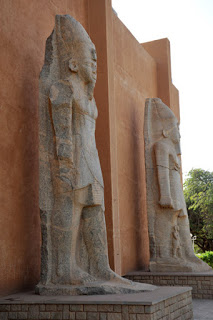
As shown below we did do more sightseeing in Khartoum as shown below visiting the National Museum and Khalifa's House as well as shopping at the Souk Omdurman.  Tim and I also played tennis at a local club.   


In Khartoum the team at the confluence of the White and Blue Nile Tim, Shawn, Deborah, Mike, Reno, Mark, Lavon and me

At the National Museum

Kushite Statues


Khartoum Sphinx


Mary and Child 11th Century Petros Cathedral

Khartoum Khalifa's House in Omdurman


Saturday, February 16, 2013

Juba, South Sudan

Overview:

South Sudan gained independence from Sudan on 9 July 2011 as the outcome of a 2005 agreement that ended Africa's longest-running civil war.  Made up of the 10 southern-most states of Sudan, South Sudan is one of the most diverse countries in Africa. It is home to over 60 different major ethnic groups, and the majority of its people follow traditional religions.  Independence did not bring conflict in South Sudan to an end. Salva Kiir Mayardit became president of South Sudan - then still part of Sudan - and head of the Sudan People's Liberation Movement (SPLM) in 2005, succeeding long-time rebel leader John Garang, who died in a helicopter crash.  Mr. Kiir was re-elected as president in multiparty polls in the south in April 2010. In July 2011, when South Sudan became independent, he became president of the new state.  Just two years later, however, the country was engulfed by civil war when Mr. Kiir sacked his entire cabinet and accused Vice-President Riek Machar of instigating a failed coup.  In August 2018, after five years of civil war, he signed a power-sharing agreement with rebel leader Machar and other opposition groups in a bid to end the brutal conflict. 

Source:  BBC Country Profile


South Sudan is about the size of Texas and is among the world’s poorest countries  

American Embassy Juba:

We had a very homogeneous team headed up by Ambassador Reno Harnisch.  Reno had been Ambassador to Azerbaijan and Kosovo as well as DCM in Cairo and Stockholm.  He was from San Diego, had two Master's in Economics and International Service and spoke several languages including German, Italian, Swedish and some Arabic and Azerbaijani. Our deputy was mark Mayfield, an excellent writer and editor.  Michael Hurley (PD), Deborah Klerk, POL/ECON, Lavon Sajano (DS), Shawn O'Reilly (DS) Tim Williams (IT) and Ralph Kwong, Management lead rounded out the team.  The embassy operates from a USAID office compound. Embassy employee housing is mostly on a residential compound, about 500 yards from the office compound.  The Ambassador was Susan Page and the newly arrived Management Officer, Nancy Brannaman had several administrative challenges. 

Findings:

We had quite a few formal recommendations (44) and informal recommendations (17) particularly in staffing and Human Resources, especially since the embassy was fairly new and had been without an Ambassador and Management Officer for an extended period.    needed to immediately implement plans for provision of International Cooperative and Administrative Support Services (ICASS) and disseminate management instructions and notices to staff in a timely manner.  Nancy retired and is now working as a Retired Annuitant with INL.  

Among the staffing issues it was recommended that incoming political/economic and public diplomacy officers to Embassy Juba have 2-year assignments, with the first year in either the Bureau of African Affairs or the Office of the Special Envoy for Sudan and South Sudan.   

In terms of facilities, we recommended that embassy complete a risk/cost/benefit on the question of constructing an interim office building pending completion of a new embassy compound.  For general services GSO needed to define its supply chain management system, including ordering, receiving, shipping, paying, and controlling, and define and enforce responsibilities, accountability, and internal controls.  Also, implement a motor vehicle policy that limits drivers to 10-hour shifts and also a safety, health, and environmental management program in accordance with Department of State regulations.

In the areas of Human Resources management needed to implement a plan to align locally employed staff positions and functions, update and classify job descriptions as needed, assess workload, and establish a rational staffing pattern that meets mission requirements.  They needed to implement a plan for training the main timekeeper in Juba and installing the Windows Time and Attendance program to allow Juba to report time and attendance directly to the payroll office, eliminating the need to go through Embassy Khartoum.  Also, carry out an awards program that complies with Department of State regulations and hold awards ceremonies twice a year, as prescribed in the locally employed staff handbook.  Lastly, implement a staff training plan.    Implement an orientation program for newly arrived Americans and recently appointed locally employed staff.  Also, schedule visits from the regional medical officer and regional psychiatrist.

Several recommendations in financial management concerned cashier operations including reconciling the U.S. Agency for International Development cashier accountability and close out the account with the U.S. disbursing officer.  The need to designate an alternate cashier and issue a cash advance.  Require American supervisors of sub cashiers, to perform unannounced cash reconciliations on a monthly or quarterly basis as required and to ensure that emergency payments over $500 are approved by the DCM.  Speaking of the DCM, during the exit conference, I had quite a heated discussion with the DCM on establishing a representation plan based on promoting mission goals and objectives and allocating funds to embassy sections based on plans submitted by sections.  He did not see the need for a plan or issuing a management notice describing procedures for submitting representation claims and establishing per capita limits for various types of entertainment

Highlights:

It's amazing but in the Foreign Service there are always occasions where you run into officers that you had worked with at other embassies.  Meeting Tom Miller at the embassy in Juba was a surprise.  Tom and I served together in Athens (1994-97) where he was DCM and one of my tennis and poker partners.   He went on to become the Ambassador in Greece and Bosnia-Herzegovina.  From 2010-18 Tom was President/CEO of the International Executive Service Corps, a non-profit that provides expertise to developing countries to train in best business practices.  Anyway, I ran into Tom while he was working out in the gym on the compound.  It just so happened that another friend, USAID colleague, Jerry Render, who I served with in Rabat (1990-94), was TDY in Juba at the time.  In fact, we did manage to get a poker group together and had a great time with Tom continuing to play and winning at his favorite game 7/27.          

There wasn't much to do in Juba town but we did get a chance to visit the SAB Miller brewery for a tour and tasting.  The brewery actually got their water direct by pipeline from the Nile River.  We were impressed with the facility and quality of the beer.  It happened to be located near a potential site that the embassy and OBO were considering building a new embassy.  I read later that the brewery was forced to close in 2016 due to a lack of foreign exchange.  Ambassador Page was catholic and Reno, Shawn and I would go to church with her on Sunday at St. Joseph Church.        


Along the River Blue Nile
Mike, Shawn, Mark, Lavon, Reno, Tim, Deborah and me taking a meal at the UN compound.  Ralph must have taken the photo.


Modular housing on USAID Compound
                       
American Club with pool and snack bar for social gatherings and where I stayed up all night to watch the Super Bowl and my 49ers lost to the Baltimore Ravens. 


Restaurant on the housing compound.  Mike, Deborah, me, Ralph, Shawn, Reno, Lavon, Mark and Tim


We were given a tour of the SAB Miller brewery and sample some of their finest Nile Special and White Bull (My Nickname or El Toro Blanco) brews.


Sampling beer after the tour Shawn O'Reilly and Mark Mayfield 


With my good buddy Ralph Kwong


St. Joseph Church

 
Proposed Property for New Embassy